
What does landslide mean?
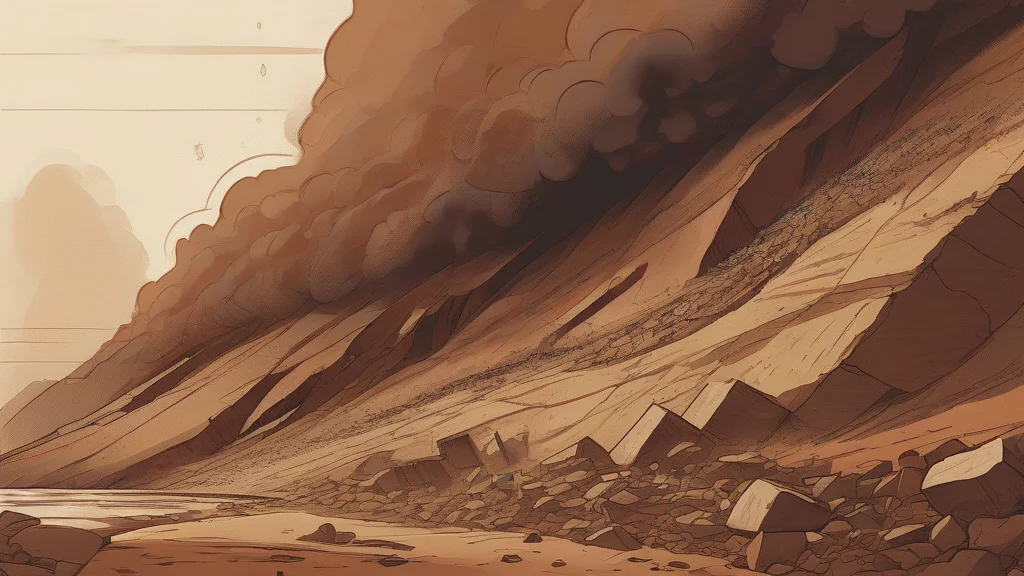
A landslide is a large mass of rock, soil, or other debris that moves rapidly down a slope, often after heavy rain, snowmelt, deforestation, or other destabilizing conditions. The word also has an established figurative meaning: an overwhelming victory, particularly in an election, where one candidate or party wins by a very large margin. In literal contexts, “landslide” is associated with geological hazards and may refer to a landslide, mudslide, or rockslide, depending on the material involved. Figuratively, it is usually positive for the winner but can convey concern when describing a “landslide victory,” suggesting an unexpectedly decisive result that may have political consequences. The term is understood throughout British and American English, although “landslip” is particularly common in British usage.
A large mass of rock, earth, or debris that moves down a slope.
"The earthquake triggered a landslide that buried several homes."
Also used figuratively for an overwhelming electoral or competitive victory.
To move or descend as a landslide, or to win overwhelmingly.
"The opposition landslide in the final vote, forcing the government to resign."
The regular plural is used for individual geological events and for decisive victories.
"Several landslides blocked access to the valley after the storm."
A landslide can transform a hillside in seconds, while the same word can describe a political victory so decisive that it is almost impossible to dispute.
Reviewed by Deb Chak, Editor. AI-assisted content curated by RJS Tech Solutions LLP.
Where does landslide come from?
“Landslide” is a compound formed from “land” and “slide,” describing material that slides down land. The word was established in the 19th century for the geological event, and the figurative sense of a decisive political victory developed later. “Landslip” is a closely related British English term formed on the same pattern.
Related word forms
How landslide is actually used
The literal sense is common in geography, news reports, and discussions of natural hazards. The figurative sense is usually used for elections, contests, and other decisive victories, and often carries the sense of an unexpectedly or overwhelmingly large margin.
Easily confused with landslide
A landslide is the general term, while landslip is especially common in British English for a mass of earth or rock that slips down a slope.