
What does rockslide mean?
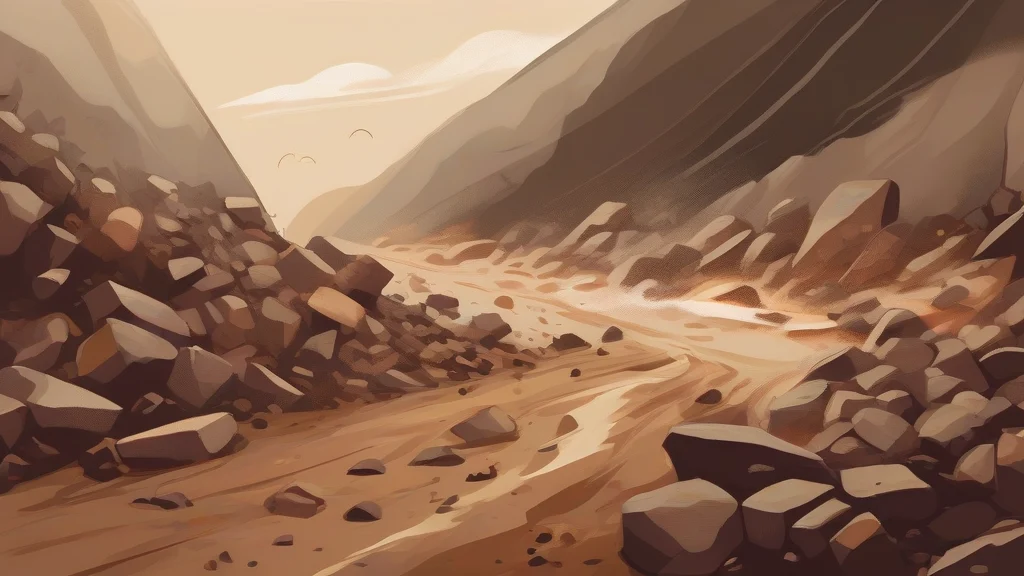
A rockslide is the rapid movement of rock, soil, or other debris down a slope, usually caused by a loss of stability in the ground. It is a specific type of landslide, distinguished from an avalanche by the material involved. Rockslides can be triggered by intense or prolonged rainfall, earthquakes, volcanic activity, snowmelt, and erosion, and they may travel quickly through steep or narrow valleys. The phrase is commonly used in geology and in reports of natural disasters, where the dangers include blocked roads, damaged buildings, injured people, and disrupted transport. In everyday writing, “landslide” is broader, while “avalanche” usually refers specifically to moving snow or ice. Understanding the distinction helps readers interpret reports accurately, especially in regions where both rockfalls and snow avalanches occur.
A rapid movement of rock, soil, or debris down a slope.
"The rockslide destroyed several homes in the valley."
Also used for the mass of material involved in the movement.
To move down a slope as a rockslide.
"The hillside rockslided after days of torrential rain."
Rare and chiefly descriptive, especially in reports of geological or weather-related events.
The usual plural form for separate rockslide events or masses of displaced rock.
"Several rockslides blocked the highway after the earthquake."
A rockslide moves rock rather than snow, but it can be just as destructive.
Reviewed by Deb Chak, Editor. AI-assisted content curated by RJS Tech Solutions LLP.
Where does rockslide come from?
“Rockslide” is a compound formed from “rock” and “slide,” with the second element retaining the sense of moving down a surface. “Slide” comes from Old English slīdan and belongs to a Germanic family of words that also includes related forms such as “slip” and “slippery.” In modern English, the compound emphasizes a slide involving rock rather than snow or another material.
Related word forms
How rockslide is actually used
The term is chiefly used in geology, geomorphology, disaster reporting, and mountain safety. It is more specific than “landslide” and should not be used for a snow or ice movement.
Easily confused with rockslide
A rockslide is a landslide involving primarily rock, whereas the broader term landslide can include soil, debris, or other material moving down a slope.
A rockslide moves rock and earth, while an avalanche typically consists of snow and ice.