
What does larkspur mean?
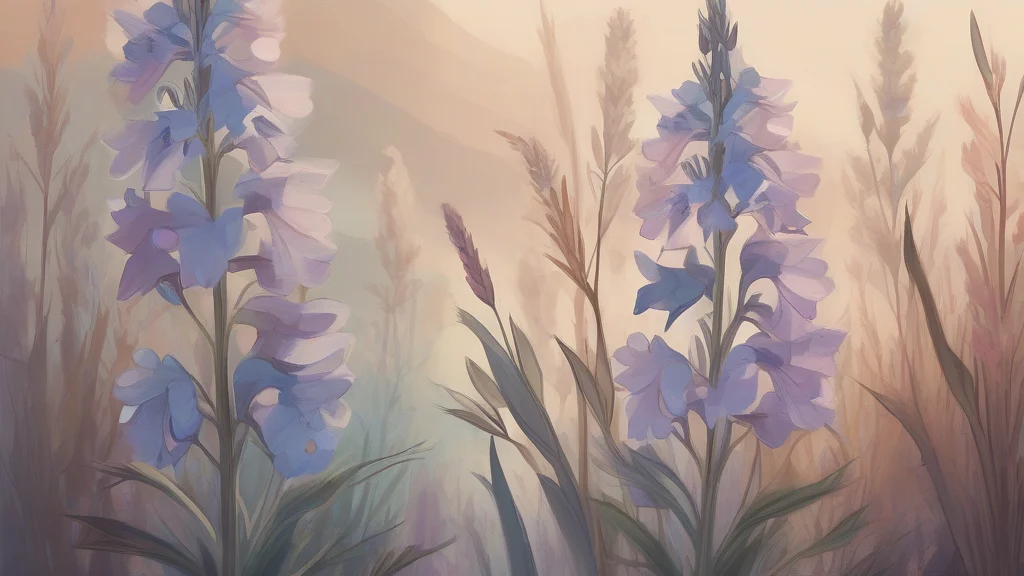
Larkspur is a common name for a group of ornamental plants in the buttercup family, especially members of the genus Delphinium. These plants are cultivated for their tall spikes of showy flowers, which may be blue, violet, pink, white, or occasionally red. Each flower has a distinctive elongated spur extending backward from its base, where nectar is held. The word may refer either to the whole plant or, in decorative and florist contexts, to its cut flowers. Larkspurs are associated with cottage gardens, borders, and bouquets, and their flowers are frequently cut for arrangements. In botanical writing, the more formal term “delphinium” is often preferred, though it does not correspond perfectly to every plant popularly called larkspur. The name is especially memorable because it visually links the flower’s nectar spur with the small hind-leg spur of a lark.
nounAny of various plants of the buttercup family, especially those in the genus Delphinium, bearing showy flowers with a long, backward-pointing spur. The word may also refer to the flowers of these plants, which are commonly blue, purple, pink, or white.
- A plant of the buttercup family, especially a delphinium, with showy flowers and a prominent rearward-pointing spur.
- The flowers of a larkspur plant, especially when gathered or displayed as a decorative bunch.
"A spray of pale blue larkspur brightened the windowsill."
"Larkspur grew along the cottage garden in tall, densely flowered spikes."
"The florist arranged blue larkspur and white roses in a low centerpiece."
Countable when referring to separate plants; in other contexts, “larkspur” may be used collectively for the flowers.
"Several larkspurs grew beside the wooden fence."
A larkspur’s name is a visual clue: its backward-pointing nectar spur resembles the bony spur behind a lark’s leg.
Reviewed by Deb Chak, Editor. AI-assisted content curated by RJS Tech Solutions LLP.
Where does larkspur come from?
Larkspur is an English compound formed from “lark” and “spur,” reflecting the resemblance between the flower’s backward-pointing nectar spur and the spur on a lark’s leg. The compound is recorded in the sixteenth century. “Lark” has roots in Old Norse, while “spur” was borrowed through Old French from Latin calcar, a word associated with the heel or spur.
Related word forms
How larkspur is actually used
In horticultural usage, “larkspur” commonly refers to delphiniums and their flowers; the name can therefore denote either an individual plant or the flowers when used collectively.