
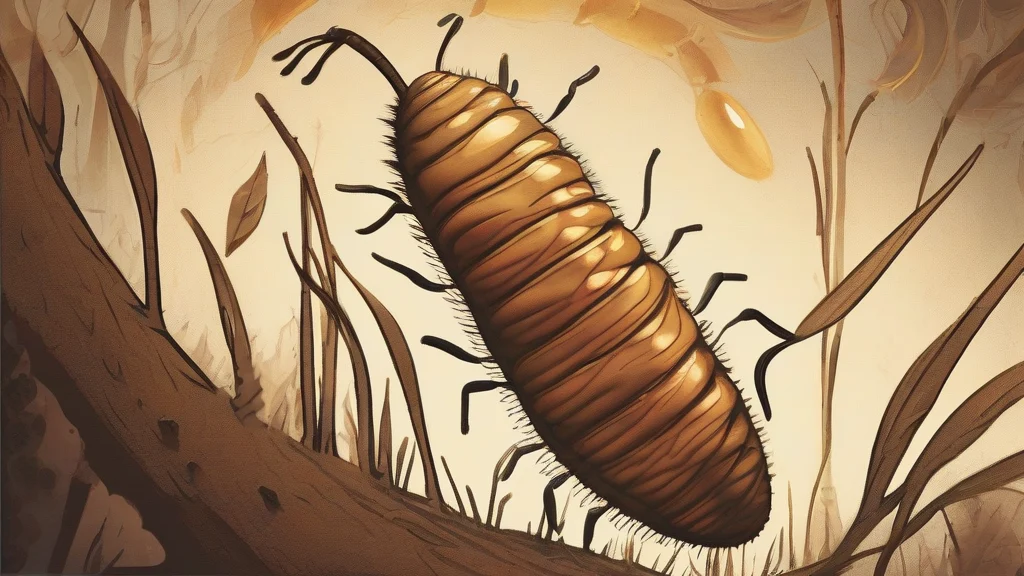
What does larva mean?
A larva is the immature form of an insect or another animal that looks markedly different from its adult and usually undergoes metamorphosis before reaching maturity. The word is especially important in entomology, where it identifies the active feeding stage between the egg and the pupa or adult in insects with complete metamorphosis. A caterpillar, for example, is the larval form of a butterfly, while a maggot is the larval form of a fly. Outside biology, larva is sometimes used figuratively for a person or thing in an early stage of development, suggesting that substantial growth or transformation is still ahead. The term is more precise and technical than terms such as grub or young, and its use usually implies a distinct developmental stage rather than merely an animal that has not yet reached adulthood.
nounA larva is the immature form of an insect or other animal that differs substantially from its adult form and typically develops through a major metamorphic change. In entomology, the term refers especially to the active feeding stage between the egg and the pupa or adult.
- The immature, usually wormlike or caterpillar-like form of an insect or other animal that differs markedly from the adult.
- The active, feeding stage of an insect's development, occurring between the egg and the pupa or adult in complete metamorphosis.
"The caterpillar is the larval stage of a butterfly."
"The mosquito larva lives near still water before it develops into a pupa."
"The larva feeds heavily on leaves before entering its cocoon."
The standard plural is irregular: the singular larva has the open syllable -a, while the plural larvae is commonly pronounced with a long final vowel.
"The larvae feed on the leaves for several days before pupating."
A larva is nature’s understudy: it may look nothing like the adult it will become, then rebuild itself in a transformation known as metamorphosis.
Reviewed by Deb Chak, Editor. AI-assisted content curated by RJS Tech Solutions LLP.
Where does larva come from?
The word comes from Latin larva, originally meaning a ghost, mask, or evil spirit. The scientific sense developed in the early 19th century as zoologists adopted the word for the transitional immature forms of insects, which often bear little resemblance to the adults they become. Latin larva also underlies scientific derivatives such as larviform and larvaceous, as well as the closely related adjective larval.
Related word forms
How larva is actually used
In scientific and educational contexts, larva refers to the immature stage of an animal whose form differs noticeably from the adult. The plural is larvae, pronounced with a long final vowel in standard English.