
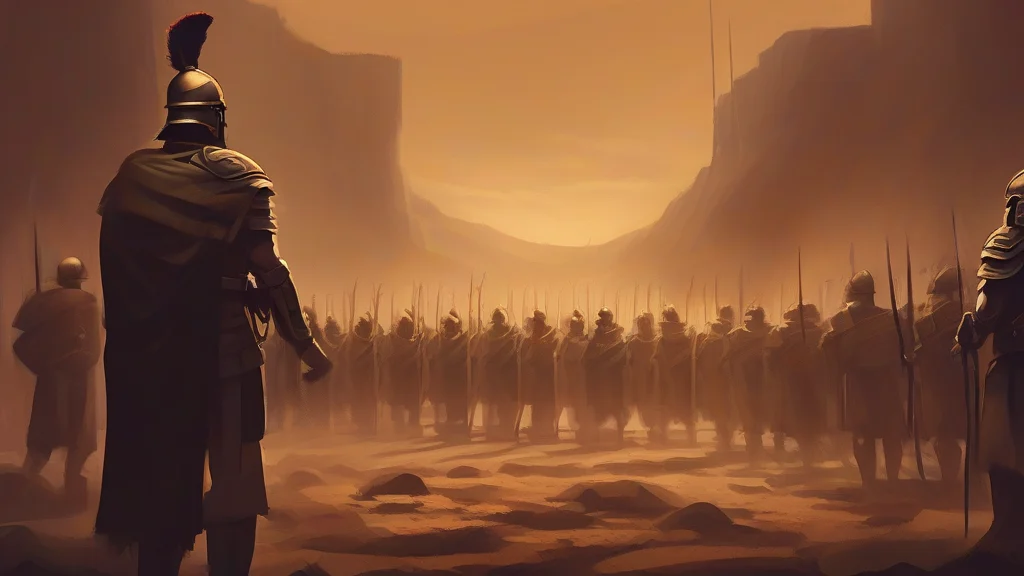
What does legion mean?
A legion is a large military organization, most famously one of the divisions of ancient Rome’s army. The word can also refer to a member of such a unit, especially a Roman soldier. In modern usage, “a legion of” means a very large group, often of people attracted to a common purpose: a legion of fans, protesters, applicants, or supporters. This figurative use carries a mildly dramatic or emphatic tone and can suggest both the size of the group and its shared identity or purpose. The historical sense is strongly associated with the Roman army, whose legions were famous for their organization, discipline, and military effectiveness. The term remains important in history, archaeology, and military studies, while the figurative sense is common in journalism and everyday speech.
nounA large body of soldiers organized as a unit, especially a division of the ancient Roman army. By extension, the word means a large number or group of people or things.
- A large number or group of people or things.
- A military unit, especially a division of the ancient Roman army.
- A member of an ancient Roman military unit.
"The museum's gallery was filled with a legion of Roman sculptures."
"A legion of fans greeted the band at the station."
"The Roman legion advanced through the narrow pass."
The standard plural of legion is legions.
"Several legions of Roman troops were stationed along the frontier."
The modern meaning of a legion—a huge crowd—grew from the Roman name for a disciplined military unit: even an ancient legion was a formidable force of many hundreds of soldiers.
Reviewed by Deb Chak, Editor. AI-assisted content curated by RJS Tech Solutions LLP.
Where does legion come from?
The English word comes from Latin legion, meaning “a division of the Roman army” and, by extension, “an army.” Latin legion derives from legere, “to choose” or “to appoint,” reflecting the original selection of soldiers for a particular unit. The same root is reflected in related English forms such as legionary and legionnaire.
Related word forms
How legion is actually used
In contemporary English, the word is often figurative and slightly dramatic, emphasizing a very large number. Its historical and military senses remain common in history, archaeology, and discussion of the Roman army.
Easily confused with legion
A legion is an organized military unit, whereas a legionnaire is a soldier who serves in a legion.
A legion is a body of soldiers or a large group, while a region is an area of land.