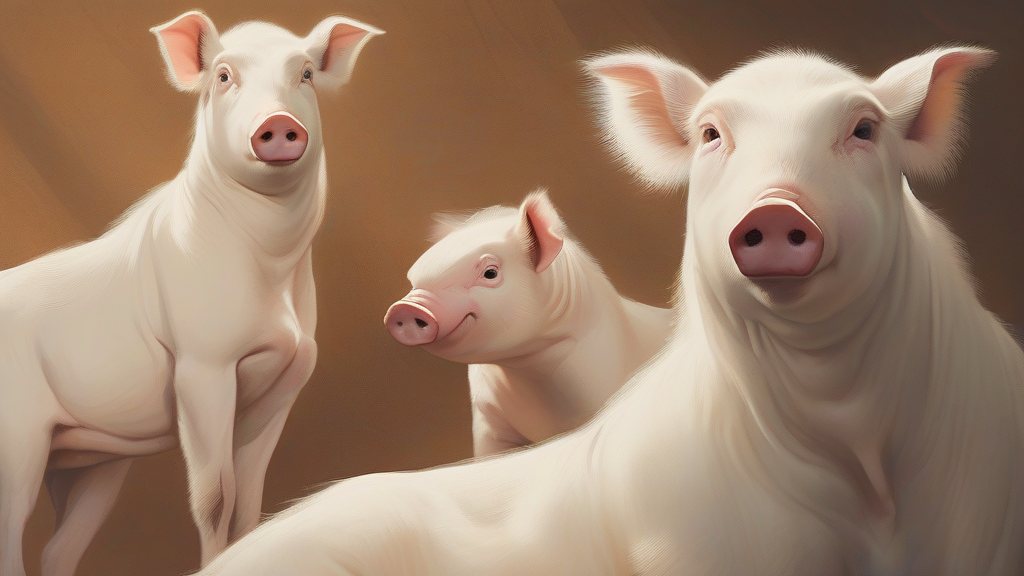
What does leucistic mean?
Leucistic is an adjective that describes a condition in which an animal or a part of an animal has reduced or absent pigmentation, often resulting in a pale or white appearance. This condition is caused by a genetic mutation and can affect various parts of the body, including the skin, feathers, or fur. Leucistic animals are often rare and can be found in nature or in captivity. The term leucistic is not the same as albinism, which is a complete lack of pigmentation. Leucistic animals may still have some pigmentation, but it is reduced or absent in certain areas. The use of leucistic is primarily in scientific and medical contexts, but it can also be used in everyday language to describe animals with this condition. Overall, leucistic is an important term in the field of biology and medicine, and it helps to describe a unique and fascinating condition.
A condition in which an animal or a part of an animal has reduced or absent pigmentation, often resulting in a pale or white appearance.
"The leucistic bird was a rare sight in the forest, its white feathers standing out against the green foliage."
Leucistic is often used to describe animals that have a genetic condition causing reduced pigmentation. It is not the same as albinism, which is a complete lack of pigmentation. Leucistic animals may still have some pigmentation, but it is reduced or absent in certain areas.
A person or animal that has leucistic
"The leucistic rabbit was a unique addition to the petting zoo."
Leucistic can also be used as a noun to refer to a person or animal that has the condition. In this context, it is often used in scientific and medical contexts to describe a specific individual or population.
The plural form of leucistic is used to describe multiple individuals or a population with the condition.
"The leucistics in the petting zoo were a popular attraction."
Reviewed by Deb Chak, Editor. AI-assisted content curated by RJS Tech Solutions LLP.
Etymology of leucistic
The word leucistic comes from the Greek word leukos, meaning 'white' or 'light'. It is derived from the same root as the word leukosis, which refers to a condition of abnormal white blood cell production. The term leucistic has been used in scientific and medical contexts since the early 20th century to describe animals with reduced pigmentation.
How leucistic is actually used
Leucistic is often used to describe animals that have a genetic condition causing reduced pigmentation. It is not the same as albinism, which is a complete lack of pigmentation. Leucistic animals may still have some pigmentation, but it is reduced or absent in certain areas.