
What does litter mean?
Litter most commonly means rubbish or other unwanted material left scattered in a public place, as in requests to pick up litter or descriptions of streets littered with cans and wrappers. It can also refer to bedding, especially straw or wood shavings used for animals. A litter of puppies or kittens is a group of young born to one mother, and the related verb can describe the act of giving birth to them. As a verb, litter also means to scatter objects carelessly or to arrange a bed with bedding. The word is therefore useful both for discussing cleanliness and waste and for describing animals, nesting materials, and disorder. Its several senses are related through the ideas of scattered material, an animal’s resting place, and the young produced in one birth.
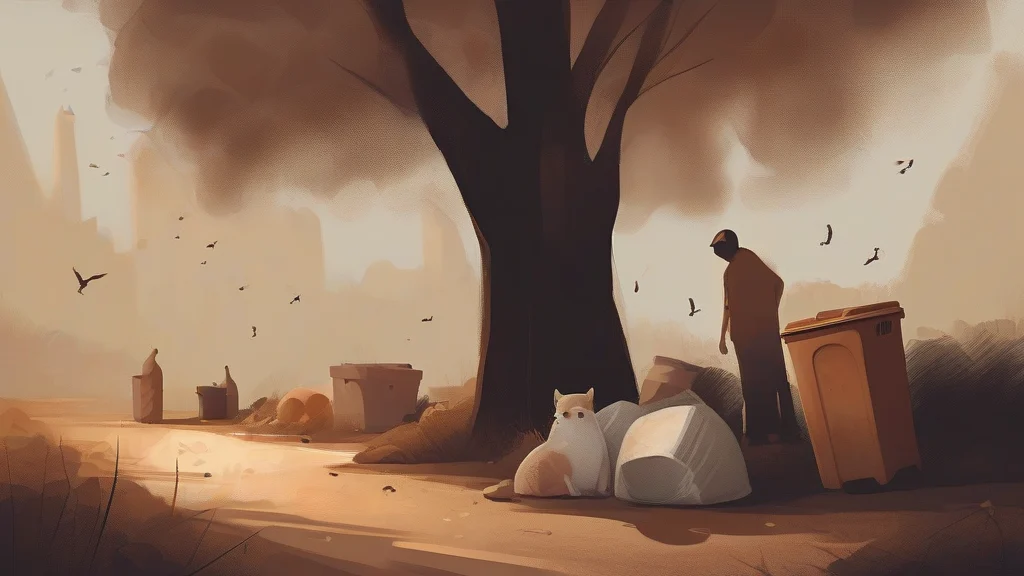
Rubbish or other discarded material scattered in a public place.
"The park was covered in litter after the concert."
Especially common in discussions of public cleanliness, waste disposal, and environmental protection.
A group of young animals born to one mother.
"The dog had a litter of six puppies."
Most commonly used with puppies, kittens, and other mammals.
Bedding scattered or arranged on the floor, especially for an animal.
"The rabbit rested on a thick bed of straw litter."
This sense is especially associated with animal husbandry and pet care.
To scatter rubbish or unwanted objects in a place.
"The wind littered the road with broken branches."
Often used in the passive form with a place or surface as the subject: "The floor was littered with papers."
Used for multiple collections of discarded material, groups of young animals, or other instances of the noun.
"The volunteers filled several bags with piles of litter."
A single litter can mean scattered rubbish, a bed for an animal, or a remarkable brood of puppies and kittens.
Reviewed by Deb Chak, Editor. AI-assisted content curated by RJS Tech Solutions LLP.
Where does litter come from?
The word comes from Old Norse littr, meaning a bed or bedding, and the verb meaning to make a bed developed from that sense. By the early 19th century, litter was also established for a group of young animals and for material scattered on the ground. The word’s older sense of bedding survives in expressions involving straw or other material used to cover the floor of an animal’s enclosure.
Related word forms
How litter is actually used
The noun is common in environmental and public-cleanup contexts. In the animal sense, it usually refers to puppies, kittens, or a similarly related group of young. The verb can be transitive or used with an indirect object, as in "the dog littered the room with toys."
Easily confused with litter
Litter refers to discarded material or a group of young animals, while little describes something small in size or significance.