
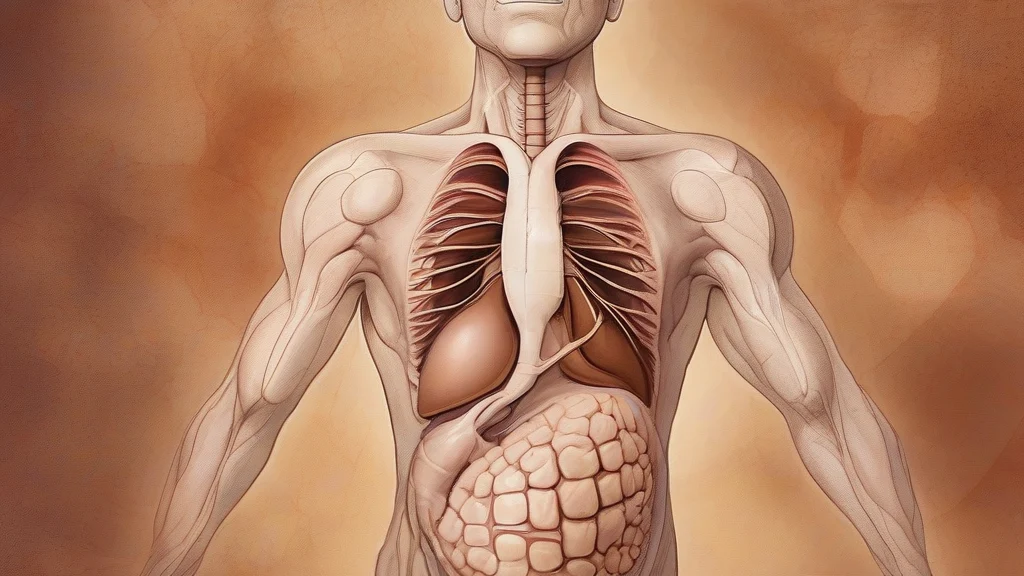
What does liver mean?
The liver is the body's large internal organ responsible for processing nutrients, producing bile, storing energy, and carrying out many chemical and detoxification functions. It is essential to digestion and metabolism, because substances absorbed from the digestive tract pass through it before entering the general bloodstream. In medical contexts, “liver” appears in expressions such as “liver disease,” “liver function,” and “liver transplant.” The word can also refer to the organ as food, as in dishes featuring liver. Although usually described simply as an organ, the liver is also a gland because it produces digestive and other important substances. Its ability to regenerate makes it unusual among human organs, although regeneration does not make serious liver disease harmless. Overall, “liver” is a familiar term whose compact meaning spans anatomy, medicine, food, and an older figurative use associated with courage.
The large internal organ that processes nutrients, produces bile, stores energy, and performs metabolic and detoxification functions.
"The scan revealed inflammation in the patient's liver."
This is the standard anatomical and medical sense.
The liver of an animal prepared as food.
"She sautéed the liver with onions and herbs."
This culinary sense is common in British and US English, although liver is eaten more widely by some communities than others.
Archaically, a person regarded as cowardly or lacking in spirit.
"The insult called him a liver."
This sense is obsolete in ordinary modern use and survives mainly in the compound “white-livered.”
Usually singular when referring to the organ generally. The plural refers to multiple livers or to liver as food.
"The study examined how healthy and diseased livers process medication."
The liver is essential for life, yet it is also remarkably regenerative: a healthy liver can regrow much of itself after substantial injury.
Reviewed by Deb Chak, Editor. AI-assisted content curated by RJS Tech Solutions LLP.
Where does liver come from?
The English word descends from Old English “lifer,” used for the organ. Its older English cognates include Old Norse “lif” and Middle Dutch “lever,” while German has the related “Leber.” The word's relationship to “live” and “life” is uncertain and should not be treated as a straightforward modern connection.
Related word forms
How liver is actually used
“Liver” is standard in medical, biological, and culinary contexts. The archaic sense meaning a cowardly or spiritless person is now chiefly encountered in compound expressions such as “white-livered.”
Easily confused with liver
“Liver” is a noun naming an organ, while “live” is a verb meaning to be alive or a form of the adjective meaning currently being broadcast or performed.
“Livid” means extremely angry and is sometimes confused with “liver” by sound, but it is an adjective and has no anatomical meaning.