
What does llama mean?
A llama is a domesticated camelid native to South America, resembling a small, long-necked relative of the camel and known for its thick, woolly coat. Llamas have traditionally been used as pack animals and are also raised for their meat and valuable fleece. In contemporary English, “llama” has a second, figurative meaning: an informal term for a political leader, spokesperson, or representative who operates on behalf of someone else. This use often carries a mildly dismissive implication, suggesting an intermediary who may be controllable, discreet, or politically subordinate. The word can therefore be understood both literally as an animal familiar in Andean and other South American cultures and metaphorically as a description of a prominent figure acting in another person’s name. Its unusual combination of a distinctive farm animal and a political metaphor makes it a memorable word in both senses.
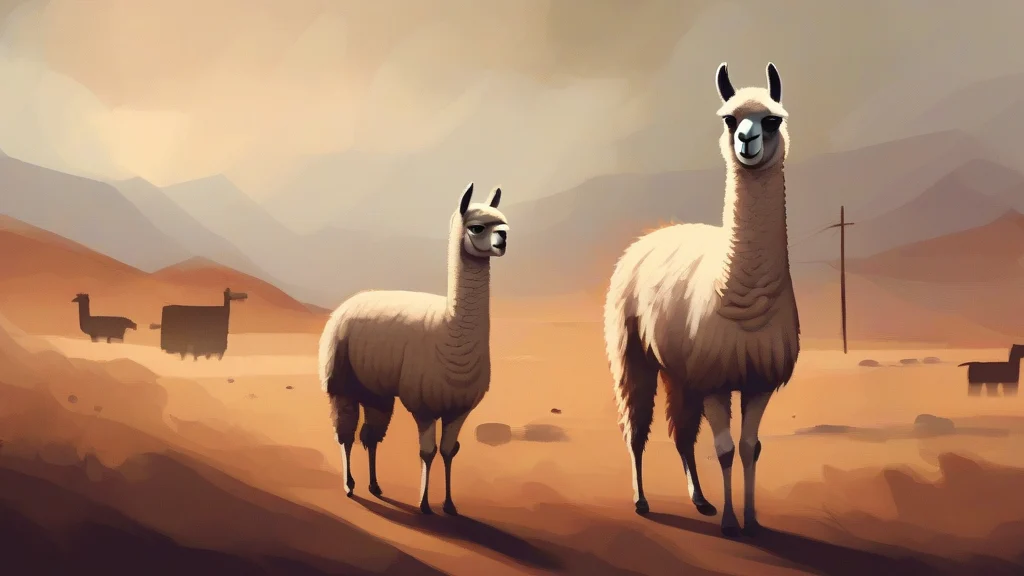
A domesticated South American mammal of the camel family, with a long neck, prominent ears, and a thick woolly coat.
"Llamas are well adapted to dry, high-altitude environments in the Andes."
In zoological and agricultural contexts, the term refers specifically to the domesticated South American camelid.
Informally, a leader or spokesperson who acts on behalf of another person or organization.
"The deputy acted as the prime minister’s llama during the inquiry."
This figurative use is informal and often implies a subordinate or intermediary role.
The standard plural is formed by adding “-s.”
"Several llamas grazed beside the mountain trail."
The llama is South America’s woolly, long-necked camel relative—and, in political language, a leader who works behind the scenes.
Reviewed by Deb Chak, Editor. AI-assisted content curated by RJS Tech Solutions LLP.
Where does llama come from?
The English word comes through Spanish, which borrowed the term for the animal from Quechua, an Indigenous language of the Andes. Spanish “llama” was adopted into English in the 17th century, initially in accounts of South American animals and commodities. The modern figurative political sense developed much later, by analogy with the animal’s historical role as a pack animal that carried a person or their goods.
How llama is actually used
The animal sense is standard in South America and internationally in zoology, agriculture, and textile contexts. The political sense is informal and usually somewhat dismissive or figurative, suggesting that someone speaks or acts for another person.
Easily confused with llama
A llama is a domesticated South American camelid, whereas an alpaca is a different domesticated camelid, generally smaller and valued especially for its fine fleece.
“Lama” is an alternative spelling of “llama” in some English contexts, though “llama” is the standard spelling.