
What does locomobile mean?
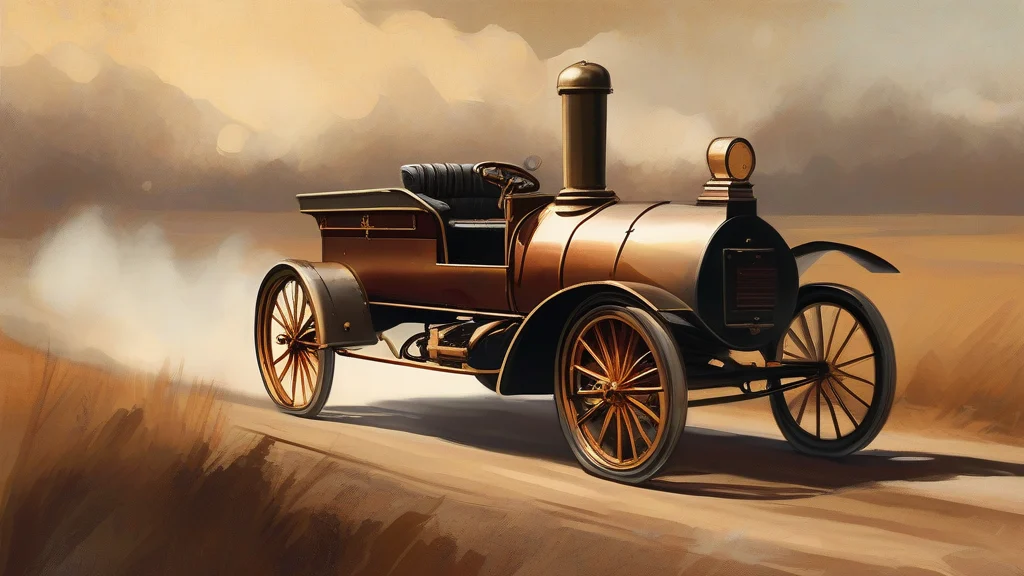
Locomobile is an archaic adjective meaning self-propelled: it describes a machine or vehicle able to move under its own power rather than being pulled, pushed, or carried. In modern writing, “self-propelled” and “motorized” are more natural and precise, but locomobile survives in historical descriptions, museum labels, and discussions of early transport technology. The word can apply broadly to any independently powered mechanism, so it does not necessarily indicate a road vehicle in the restricted modern sense of “automobile.” Its chief interest lies in the history of mechanical locomotion: it reflects an era when writers needed a general term for machinery capable of moving itself. The expression is uncommon in everyday British and American English and may sound literary, dated, or deliberately technical.
adjectiveSelf-propelled; able to move without being drawn or pushed by an external source. The word is now chiefly archaic or literary.
- Self-propelled; able to move without being drawn, pushed, or otherwise propelled by an external source.
"The early twentieth-century engineers admired the newly developed locomobile machines."
"The museum restored the rare locomobile device to working order."
"At the exhibition, visitors admired the clockwork-like locomobile toys and machines."
Locomobile preserves an early stage of modern transport: before “automobile” became standard, writers used it for machinery that could move itself.
Reviewed by Deb Chak, Editor. AI-assisted content curated by RJS Tech Solutions LLP.
Where does locomobile come from?
Locomobile was formed in the early nineteenth century from Latin loco, meaning “place,” and mobile, meaning “movable” or “able to move.” Its development follows the same Latin root found in locomotion, locomotive, and locomotor. The word originally conveyed the idea of motion generated from within the machine itself, and it later became associated with early self-propelled vehicles and mechanical devices.
How locomobile is actually used
Chiefly archaic, literary, or historical. In modern English, “self-propelled” or “motorized” is normally preferred. The word is broad and can refer to a machine or vehicle rather than only to an automobile.
Easily confused with locomobile
Locomobile describes a machine capable of moving under its own power, whereas locomotive is a self-propelled engine that pulls railway vehicles or other loads.
Locomobile is an archaic broad term for a self-propelled mechanism, while automobile usually refers specifically to a passenger road vehicle.