
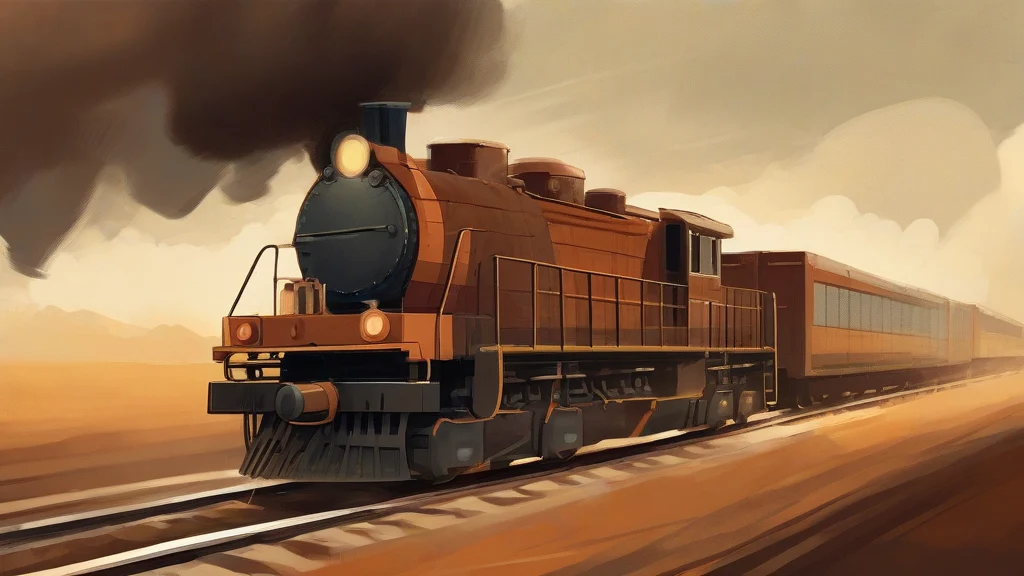
What does locomotive mean?
Locomotive is chiefly a noun for a self-propelled railway vehicle that draws or pushes coaches, wagons, or other cars. In everyday railway language, a locomotive is the powered unit at the front or rear of a train; “engine” is a common synonym, although informal speakers may also use it for the train as a whole. Locomotive can also function as an adjective meaning connected with movement from place to place, as in “locomotive power,” or, in older usage, able to move independently. The noun is standard in British, American, and international railway English and usually has a technical rather than literary tone. Because the word links modern rail transport with its Latin roots—locus, “place,” and movere, “to move”—it effectively names a machine that moves itself while hauling other vehicles. Its longest figurative use is in discussions of “locomotive forces,” powerful influences that propel a person or system onward. The word remains useful because it is precise: it identifies the train’s motive power without referring to the entire train or to a road vehicle.
A self-propelled railway engine designed to pull or push a train and its cars.
"The locomotive slowed as it approached the station."
This is the dominant modern sense. The word normally refers to the powered rail vehicle itself rather than the entire train.
Relating to movement from place to place; in older usage, having the power to move independently.
"The company invested in new locomotive technology."
The adjective is less frequent than the noun and is often literary, technical, or figurative.
The regular plural is used when referring to multiple railway engines or powered rail vehicles.
"Several locomotives were parked in the maintenance yard."
The word locomotive combines Latin roots meaning “place” and “move”—an apt name for the machine that carries a whole train across the map.
Reviewed by Deb Chak, Editor. AI-assisted content curated by RJS Tech Solutions LLP.
Where does locomotive come from?
The word entered English in the early nineteenth century as the name of a self-propelled railway engine. It was borrowed from French locomotive, whose source was Latin locomotīvus, formed from locus, meaning “place,” and movere, meaning “to move.” Closely related forms such as locomotion and locomotor preserve the same roots, which also underlie the modern figurative sense of a force that drives change or progress.
Related word forms
How locomotive is actually used
The noun is standard technical vocabulary in British and American railway usage. The adjective is less common and often literary, technical, or figurative. In informal British usage, “engine” can sometimes refer to an entire train, while “locomotive” normally identifies only the powered vehicle.
Easily confused with locomotive
Locomotion is the process or means of moving from one place to another, whereas a locomotive is a powered railway vehicle.