
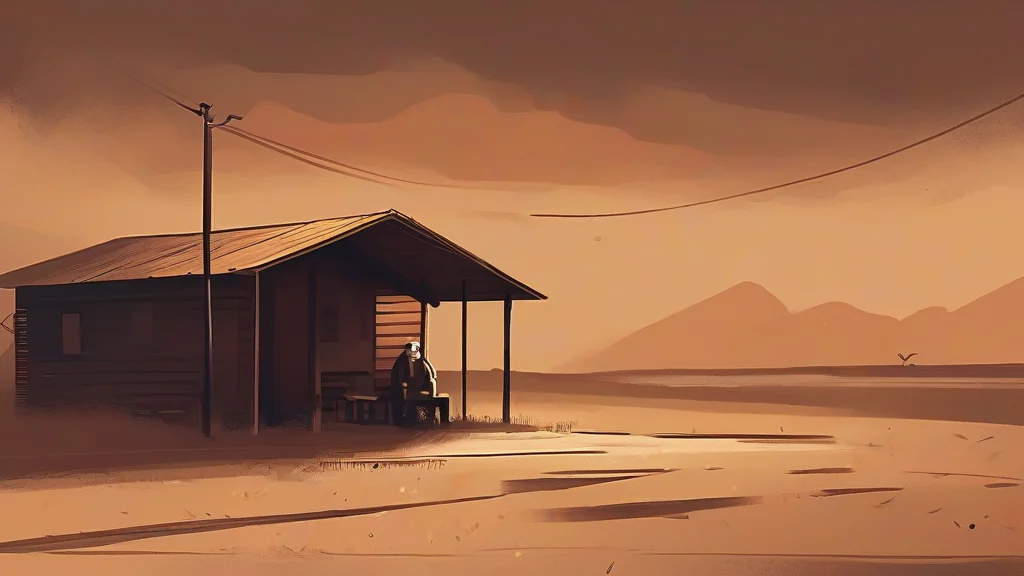
What does loneliest mean?
Loneliest is the superlative form of the adjective lonely, meaning more lonely than anything or anyone else in a comparison. It describes an exceptional degree of isolation, whether emotional, social, or geographical. A person may feel loneliest after a bereavement, a separation, or a period of prolonged solitude. The word can also characterize places, times, and experiences: a remote village might be the loneliest place in the country, while late at night can be the loneliest hour. Unlike the related word alone, which simply indicates the absence of other people, loneliest commonly implies that companionship is missing or difficult to obtain. In its emotional sense, it often conveys sadness, vulnerability, or a longing for connection, although context can also make the description more neutral or atmospheric.
adjectiveThe superlative of lonely; more lonely than any other person or thing.
- More lonely than any other person or thing.
"After her closest friend moved away, she felt loneliest of all."
"The old lighthouse was the loneliest building on the coast."
"She admitted that winter was the loneliest part of the year."
The loneliest person is not necessarily the one with the fewest people nearby, but the one who most strongly feels separated from companionship.
Reviewed by Deb Chak, Editor. AI-assisted content curated by RJS Tech Solutions LLP.
Where does loneliest come from?
The word belongs to the English family of alone, lone, lonesome, and loneliness. Its root reaches back to Old English ālāna, meaning “all alone” or “solitary,” formed from elements meaning “all” and “alone.” The adjective lonely developed with the modern English suffix -y, and the superlative form loneliest follows the regular pattern of adding -est. Related forms such as lonesome and aloneness preserve the same basic sense of being without companions.
Related word forms
How loneliest is actually used
The word is the superlative form of lonely and normally describes a person, place, period, or experience that is exceptionally lonely. It is especially natural in emotional and literary contexts.
Easily confused with loneliest
Alone describes being without companions, whether chosen or not, whereas lonely emphasizes an emotional sense of isolation or unhappiness.