
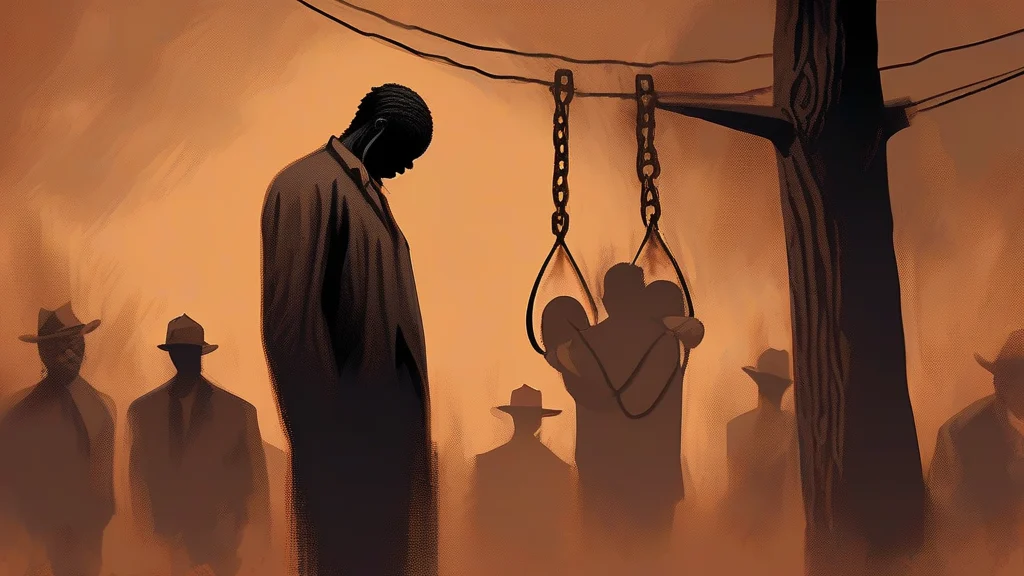
What does lynched mean?
Lynched is the past tense and past participle of lynch, a word for an unlawful killing carried out by a mob or other extralegal group, usually following a summary judgment. In modern English, it describes an intentional killing that bypasses legal process and may also be used attributively before a noun, as in “a lynched victim.” The term is especially associated with the history of racial violence in the United States, where lynching was used to terrorize Black people and, in some periods, other targeted groups, although the word is not limited to racial killings. Because it carries a violent historical association, “lynched” is strongly negative and is not a neutral synonym for any ordinary killing. It should be reserved for killings involving mob action or deliberate extra-legal punishment rather than used loosely for executions by recognized state authorities.
verbLynched is the past tense and past participle of lynch: to kill someone, especially as an extrajudicial act committed by a mob.
- Killed, especially by a mob acting outside legal process.
"The victim was allegedly lynched by a mob after a summary trial."
"The report said that the man had been lynched by an armed mob."
"Historians documented the communities torn apart by the lynching of Black victims in the late nineteenth century."
“Lynch law” was named for a Virginia sea captain, although historians still debate how directly his actions created the word.
Reviewed by Deb Chak, Editor. AI-assisted content curated by RJS Tech Solutions LLP.
Where does lynched come from?
The verb lynch derives from the surname Lynch and is traditionally associated with Captain William Lynch of Virginia, who presided over an extralegal execution in the eighteenth century and was subsequently made a folk hero. The precise historical connection between his actions and the modern meaning has long been debated, so the details of that origin should not be treated as settled fact.
Related word forms
How lynched is actually used
The term is strongly negative and is especially associated with mob violence and the history of racial terror in the United States. It is not a neutral substitute for legally sanctioned execution.