
What does machete mean?
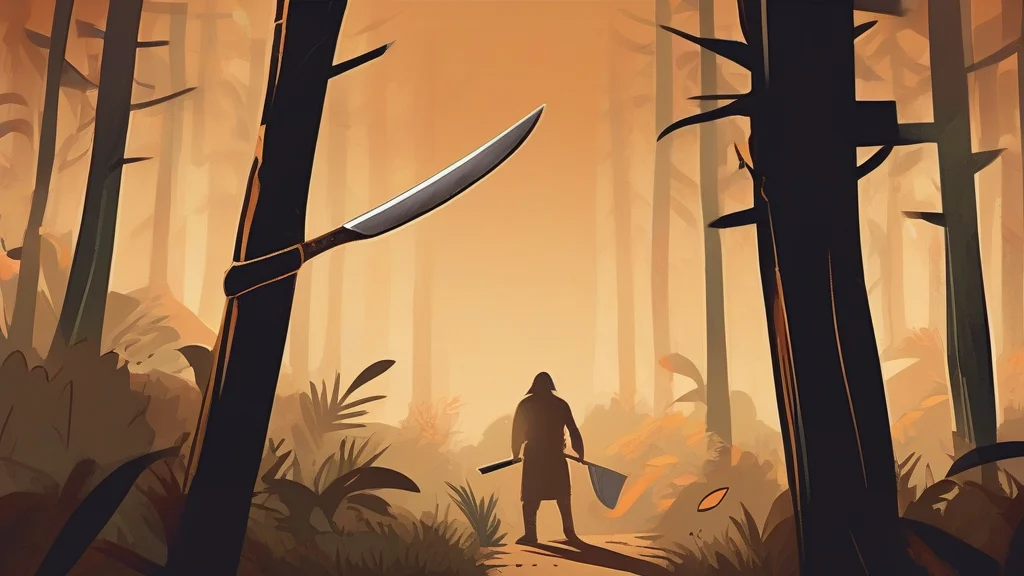
A machete is a large, heavy knife with a broad blade, traditionally used to cut vegetation, clear paths, harvest crops, and perform other demanding outdoor work. It is especially associated with agriculture and rural life in tropical regions of the Americas, although the word is now used internationally. A machete can also serve as a weapon, and references to machete attacks carry clear associations with violence and danger. The verb machete means to cut something with a machete and, in informal figurative use, to criticize or attack something with cutting remarks. Its unusual history is memorable: the English word derives from Spanish machete and ultimately from a Quechua word for a knife, with the French form machette also appearing in the word's development. The term is therefore a vivid example of how words associated with particular regions and working communities travel into wider international use.
A heavy, broad-bladed knife used for cutting vegetation, clearing paths, harvesting crops, or felling small trees; it may also be used as a weapon.
"The workers carried machetes and buckets as they entered the forest."
The sense associated with agriculture and land clearance is especially common in tropical regions, while descriptions of a machete used as a weapon often carry strong connotations of violence.
To cut or clear a path with a machete; figuratively, to criticize or attack something sharply and indiscriminately.
"They macheted through the thick grass toward the river."
The figurative sense is informal and more commonly used in criticism, commentary, and political or media discussion.
The standard plural is machetes, with the final -e retained before -s.
"The guides carried two machetes and several coils of rope."
The machete travelled into English through Spanish and French, ultimately preserving a word from Quechua, the Indigenous language of the Andes.
Reviewed by Deb Chak, Editor. AI-assisted content curated by RJS Tech Solutions LLP.
Where does machete come from?
The English word entered use in the 19th century from Spanish machete, a broad-bladed knife whose ultimate source is the Quechua macheti, meaning “knife.” The French form machette also contributed to the word's early English appearance. Over time, the machete became associated particularly with cutting sugar cane, clearing dense vegetation, and other forms of agricultural work.
Related word forms
How machete is actually used
In figurative verb use, the expression is informal and strongly critical. As a noun, it can refer to an agricultural tool or a weapon depending on context, and it may carry connotations of violence when associated with an attack.
Easily confused with machete
A machete is generally longer and broader, resembling a large knife, whereas a hatchet is a smaller tool with the blade aligned to a short handle.