
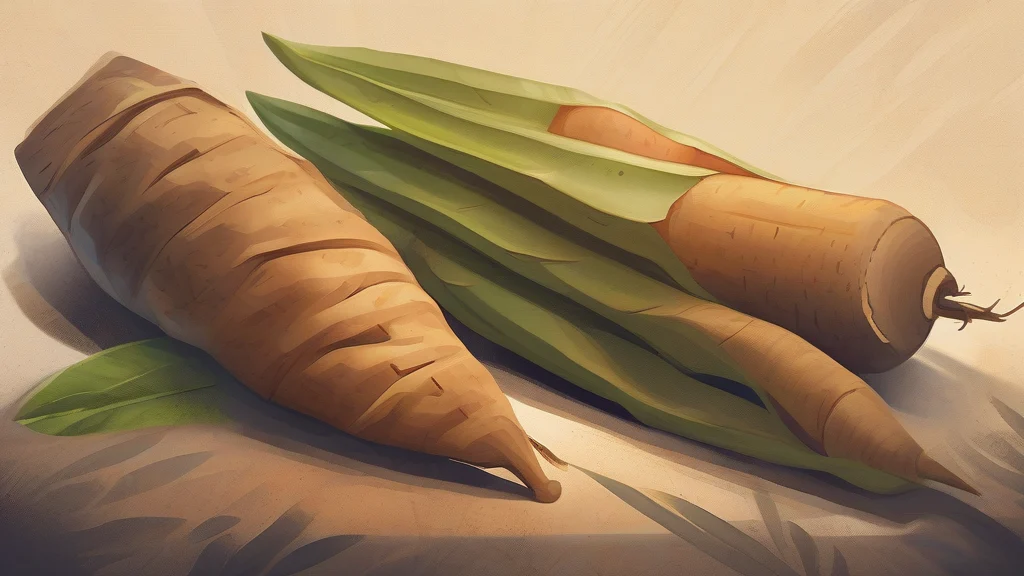
What does manioc mean?
Manioc is another name for cassava, a tropical crop grown widely in warm regions for its large, starchy roots. The word can refer to the plant itself, its roots, or flour and starch obtained from them. Manioc is nutritionally valuable because its roots contain carbohydrate, dietary fibre, and some vitamins and minerals, although raw manioc is unsafe to eat because it can contain compounds that release toxic hydrogen cyanide. Proper soaking, grating, pressing, heating, or other processing removes these compounds and develops the characteristic flavour of the root. The crop is especially important in areas where it provides a dependable staple food and can be processed into products such as flour, starch, gari, and tapioca. In international English, manioc is widely understood as a formal or technical name, while cassava and, in some regions, yuca are more familiar alternatives.
nounManioc is a tropical plant whose large, starchy roots are the source of cassava starch and tapioca. It is also used collectively for the plant, its roots, and the flour or starch obtained from them.
- The tropical perennial plant cultivated for its edible, starchy roots.
- The starchy root of the manioc plant or a food substance made from it.
"Farmers in the region process manioc into flour that is used to make bread, cakes, and other staples."
"The bitter variety of manioc requires soaking and processing before use."
"She replaced some of the wheat flour with manioc starch in the cake."
Usually used as a mass noun without a plural, but the unchanged form manioc is used in some contexts referring to multiple plants or roots.
"The researchers planted manioc in rows along the river."
Raw manioc contains cyanogenic compounds that can release toxic hydrogen cyanide, which is why the root must be properly processed before it is eaten.
Reviewed by Deb Chak, Editor. AI-assisted content curated by RJS Tech Solutions LLP.
Where does manioc come from?
The English word manioc comes through Portuguese from a Tupí name for the plant. Portuguese also developed the form mandioca, and the crop's botanical genus was named Manihot. The related older spelling mandihoca reflects an early English rendering of the same Portuguese-derived term.
How manioc is actually used
The word is a synonym for cassava and is used in food, agricultural, and development contexts. It generally refers to the plant or its processed products rather than to a single preparation.
Easily confused with manioc
Tapioca can refer specifically to starch extracted from cassava roots, whereas manioc more broadly names the plant, its roots, and products made from them.
Yuca is a common name for the cassava plant and its roots, while manioc is the formal or technical name for the same crop.