What does markhor mean?
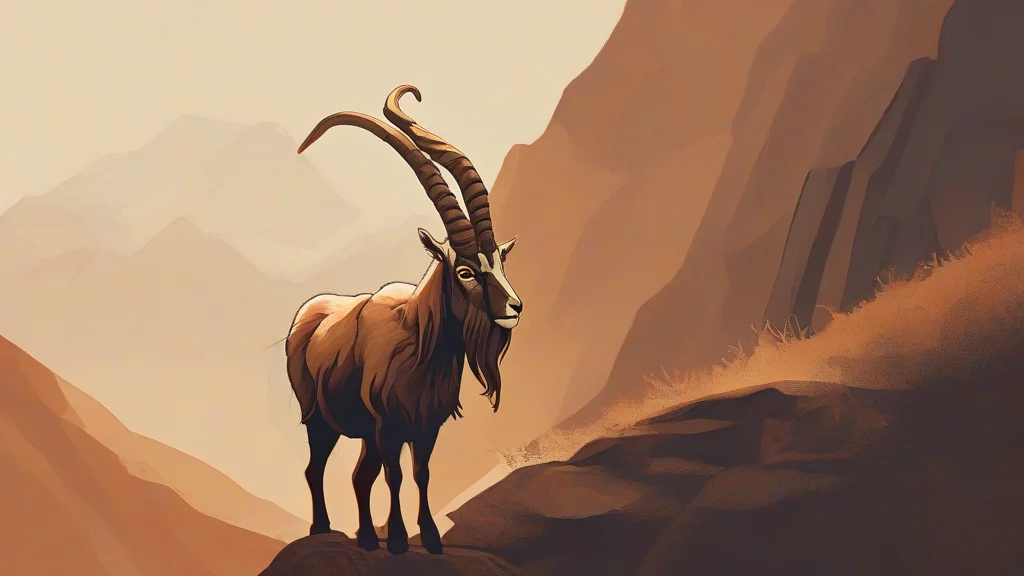
The markhor, scientifically known as Capra falconeri, is the largest species of wild goat, predominantly found in the rugged terrains of the Himalayan and Karakoram ranges across Pakistan, India, and Afghanistan. Characterized by its distinctive spiral horns that can grow impressively long, the markhor is not only a symbol of these regions but also an important part of their ecosystem. Due to its sizeable habitat requirements and vulnerability to poaching, the markhor is classified as an endangered species. Conservation efforts are underway to protect its habitat and reduce human impact on its population. The markhor's impressive physical attributes and agile nature make it a subject of interest among wildlife enthusiasts and researchers. Its ability to scale steep terrains with ease showcases its adaptation to mountainous environments.
nounThe markhor is the largest species of wild goat, native to the Himalayan and Karakoram ranges in Pakistan, India, and Afghanistan. It is characterized by its distinctive spiral horns.
- A large species of wild goat
- A type of goat with spiral horns
"The markhor is considered an endangered species due to habitat loss and hunting."
"The markhor is known for its impressive horns that can grow up to 1.6 meters long."
"Markhors are skilled climbers and can often be seen scaling steep mountain terrain."
The plural form 'markhors' is used when referring to multiple individuals of the species.
"Several markhors were spotted in the national park during the wildlife expedition."
Reviewed by Deb Chak, Editor. AI-assisted content curated by RJS Tech Solutions LLP.
Etymology of markhor
The term 'markhor' originates from the Persian words 'mar' meaning 'snake' and 'khor' meaning 'eater', likely referring to the markhor's ability to climb steep and rocky terrain like a snake. The scientific name 'Capra falconeri' honors the 19th-century Italian naturalist Giuseppe Acerbi's friend, the Italian falconer and naturalist Count Falconieri.
How markhor is actually used
The term 'markhor' is primarily used in formal or scientific contexts when referring to the species.