
What does meanderer mean?
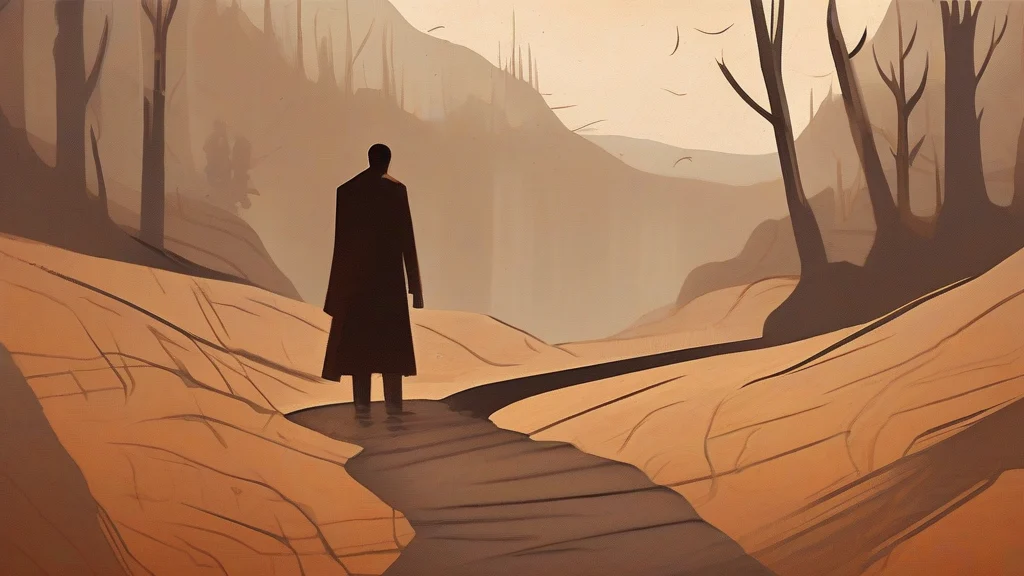
A meanderer is someone or something that follows an indirect, winding course rather than moving directly toward a destination. When applied to a person, it suggests a traveller with no fixed plan, although the word often lends the image a romantic or contemplative quality rather than suggesting aimlessness in a strongly negative sense. It can also describe a river or stream, especially one whose channel curves and turns conspicuously across the landscape. The verb “meander” has the same descriptive force: a path may meander, a speaker may meander through a topic, and a river may meander around a hill. The word is most common in literary, geographical, and descriptive writing, while everyday speakers usually choose “wanderer” or “wander” when they do not need the additional emphasis on indirect movement. Its name preserves the striking course of the ancient Maeander River, celebrated for its many bends.
A person who moves or travels without a fixed course or destination.
"A lone meanderer crossed the meadow as the evening light began to fade."
Literary and often mildly romantic in tone.
A river or stream that follows a winding or twisting course.
"The meanderer curved around the foot of the ridge before turning east."
Chiefly descriptive and especially appropriate in geographical writing.
The standard regular plural is “meanderers.”
"The trail is popular with weekend meanderers."
The word comes from the Maeander River in ancient Greece, whose famously winding course made it the perfect model for a meander.
Reviewed by Deb Chak, Editor. AI-assisted content curated by RJS Tech Solutions LLP.
Where does meanderer come from?
“Meanderer” comes through English “meander,” from the Latin “maenander,” a word derived from the Greek “Maiandros,” the ancient name of a river in southwestern Anatolia. The river's winding course led to its use as a standard example of an indirect, twisting route. English later extended the word from physical channels, especially rivers, to the figurative sense of moving or speaking without a direct course.
Related word forms
How meanderer is actually used
The word is literary and mildly descriptive. For a person, it often conveys a romantic or contemplative sense of wandering; for a river, it emphasizes the watercourse's winding shape.
Easily confused with meanderer
A wanderer generally moves from place to place, while a meanderer specifically follows an indirect, winding, or apparently aimless course.