
What does mesa mean?
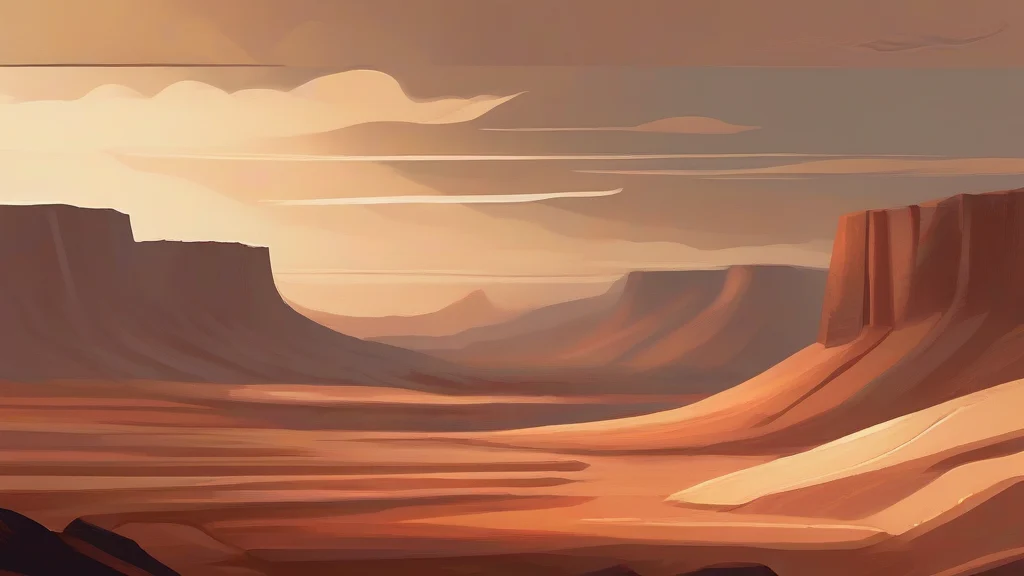
A mesa is a broad, flat-topped elevation of land with steep sides, most often found in dry or semiarid landscapes. Its name comes from Spanish, where mesa means “table,” a comparison suggested by its level summit. In English, mesa is particularly associated with the deserts and plateaus of the American Southwest, although it is used more broadly for comparable formations elsewhere. A mesa should not be confused with a butte: a butte is generally smaller and more isolated, while a mesa is often extensive, with a broad surface above the surrounding country. The word is useful in geography, travel writing, and descriptions of dramatic dry landscapes, where it identifies a landform more specific than the general term plateau.
nounA broad, flat-topped elevation of land with steep sides, typically found in arid or semiarid regions. A mesa is generally larger and more extensive than a butte, which is a smaller, isolated flat-topped rock formation.
- A broad, flat-topped elevation of land with steep sides, usually in an arid or semiarid region.
"The ranch sat on a high mesa overlooking the desert valley."
"They climbed to the edge of the mesa as the sun set behind the distant peaks."
"The road follows the base of the mesa before turning toward the river valley."
The standard plural is mesas, with the final -s pronounced /z/.
"Several mesas rise above the desert floor."
A mesa is a tableland in the landscape: a broad, flat summit standing above the surrounding terrain, especially in the American Southwest.
Reviewed by Deb Chak, Editor. AI-assisted content curated by RJS Tech Solutions LLP.
Where does mesa come from?
The English word comes from Spanish mesa, meaning “table.” Spanish borrowed the term from Latin mensa, the ordinary noun for a table or dining board, and the development reflects the visual resemblance between a table-like plateau and a table with a flat top and supporting sides. The same Latin root underlies English table and related terms such as tabular, giving the word a clear history of comparison by shape.
Related word forms
How mesa is actually used
The term is especially common in the geography of the southwestern and western United States and Mexico. It is related to plateau and tableland, but it usually emphasizes steep sides and a distinctly elevated, isolated landform.
Easily confused with mesa
A mesa is a flat-topped landform, whereas mescal is a plant or an alcoholic spirit and is not a geological formation.