
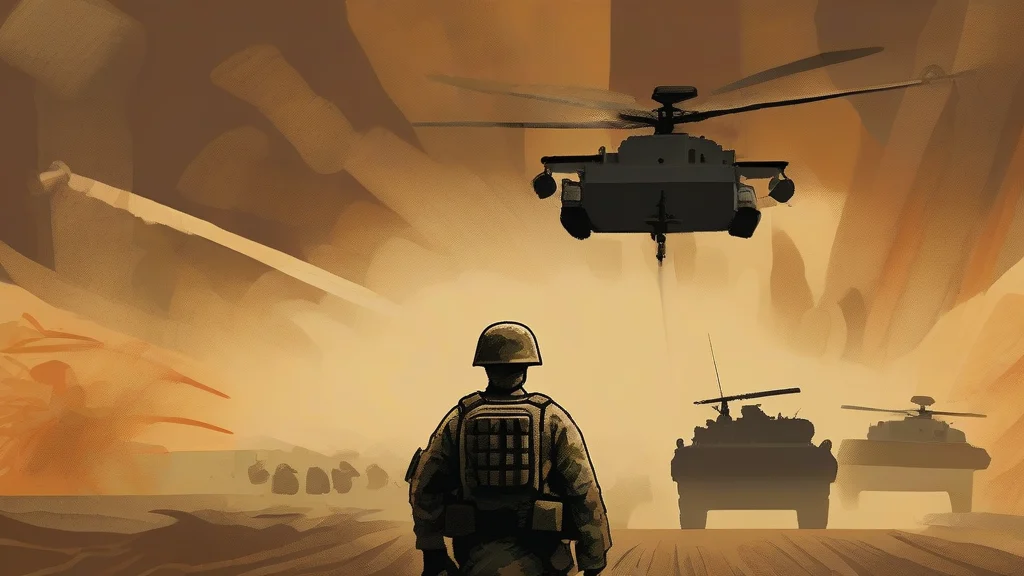
What does militarism mean?
Militarism is the belief that armed force and military strength should play a dominant role in national life or international policy. In contemporary usage, it often describes a political attitude that treats military power as the best or most reliable way to defend national interests, settle disputes, or signal strength. The word can also refer to a wider cultural emphasis on warfare, military readiness, and the prestige of the armed forces. Militarism is generally used critically: it suggests that military priorities may overshadow diplomacy, civilian values, or peaceful cooperation. It is more specific than “military,” which merely describes armed forces or military affairs, and more focused than “pacifism,” which advocates avoiding or abolishing war. The term appears frequently in discussion of nationalism, nuclear weapons, defence spending, and relations between rival powers.
nounThe belief in or emphasis on the use of military power to achieve political or national objectives. It can also refer to a country's system or culture that gives priority to armed force and military preparedness.
- A belief or policy that emphasizes military power, especially as an instrument of national policy or international relations.
- A social or political culture in which military strength, readiness, and prestige are given priority over civilian concerns.
"The speech condemned the militarism that had led the nation to distrust its neighbours."
"Domestic political disputes were increasingly framed through the rhetoric of militarism."
"The essay argued that a culture of militarism can make diplomatic compromise more difficult."
The plural is uncommon and is used mainly when referring to different forms or examples of militarism in different countries or historical periods.
"The study compares the militarisms of several postwar states."
Militarism is not simply the presence of an army: it is the idea that military power should shape national life, policy, and identity.
Reviewed by Deb Chak, Editor. AI-assisted content curated by RJS Tech Solutions LLP.
Where does militarism come from?
The word comes from the adjective “military,” which derives from Latin militaris, from miles or militia, meaning soldier or military service. The suffix “-ism” was added in the 19th century to form a noun denoting a principle or practice, so “militarism” originally referred to the doctrine or system that prioritizes military power. Its development reflects the modern expansion of states, standing armies, and military administration.
Related word forms
How militarism is actually used
The term is generally critical or analytical rather than neutral, and is especially common in political, historical, and international-relations contexts. It is more specific than simply referring to a military organization, since it implies the priority or influence of military power.
Easily confused with militarism
“Military” refers to armed forces or military affairs, whereas “militarism” specifically emphasizes the use or dominance of military power as a political or social principle.
“Militarism” is a broad attitude or belief that gives military power priority, while “militarization” usually describes the process of putting a country, institution, or issue under military control or influence.