
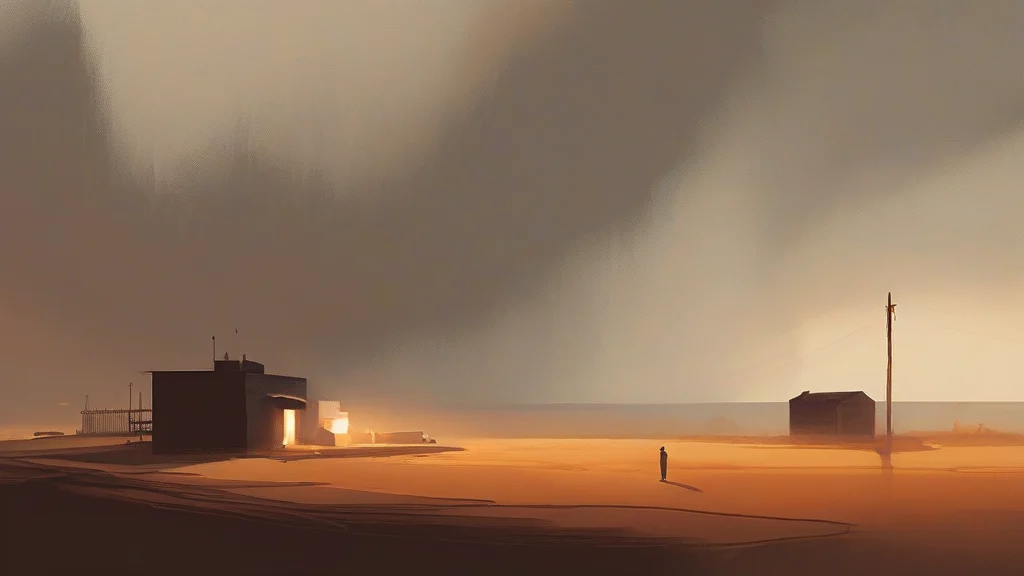
What does mirk mean?
Mirk is an uncommon noun denoting darkness, gloom, or obscurity, with a strongly literary and atmospheric tone. It can describe the deep darkness of night, an unlit landscape, or a lack of clarity, and it may also refer to dark, opaque water or another liquid. In the phrase “the mirk of night,” the word evokes an enveloping, mysterious darkness, making it especially effective in poetry and descriptive prose. Although once a common English word, mirk now survives chiefly in archaic, Scottish, and literary usage; murk is the usual neutral modern noun, while murky is the corresponding adjective. The related adjective mirky is also more familiar, particularly in British English, in expressions such as “mirky water” and “a mirky reputation.” Although murk and murky are more common, mirk distinguishes itself through its vivid, old-fashioned sound and its close association with night, concealment, and mystery.
Darkness, gloom, or obscurity, especially the deep darkness of night or an unlit place; also, a dark or murky liquid.
"Beyond the firelight, the forest was a solid wall of mirk."
Common in literary and Scottish usage but uncommon in ordinary modern standard English.
Dark, gloomy, or obscure; lacking light or clarity.
"They followed the mirk track towards the distant tower."
Archaic, Scottish, or literary; largely displaced in general use by dark, gloomy, and murky.
The plural is possible but very rarely used, since mirk normally denotes an abstract mass of darkness or gloom.
"The lamps barely reached into the scattered mirks of the ravine."
Once a standard word for darkness, mirk now survives mainly in poetry and the occasional atmospheric description of night.
Reviewed by Deb Chak, Editor. AI-assisted content curated by RJS Tech Solutions LLP.
Where does mirk come from?
Mirk comes from Middle English, where it was inherited from Old Norse myrkr, meaning “darkness” or “gloom.” It is closely related to murk, and through that connection to forms such as murky. The word was once more widely used in English but is now chiefly confined to archaic, Scottish, and literary contexts.
Related word forms
How mirk is actually used
Mirk is uncommon in contemporary standard English and has a deliberately old-fashioned, literary, or atmospheric quality. It is especially associated with poetry, descriptions of night, and Scottish usage. In figurative contexts, it can suggest obscurity, gloom, or difficulty in understanding. Murk and murky are the more familiar modern alternatives.
Easily confused with mirk
Mirk is an archaic or literary word for darkness or gloom, while murk is the more common modern noun and is also used for opaque, muddy water.