
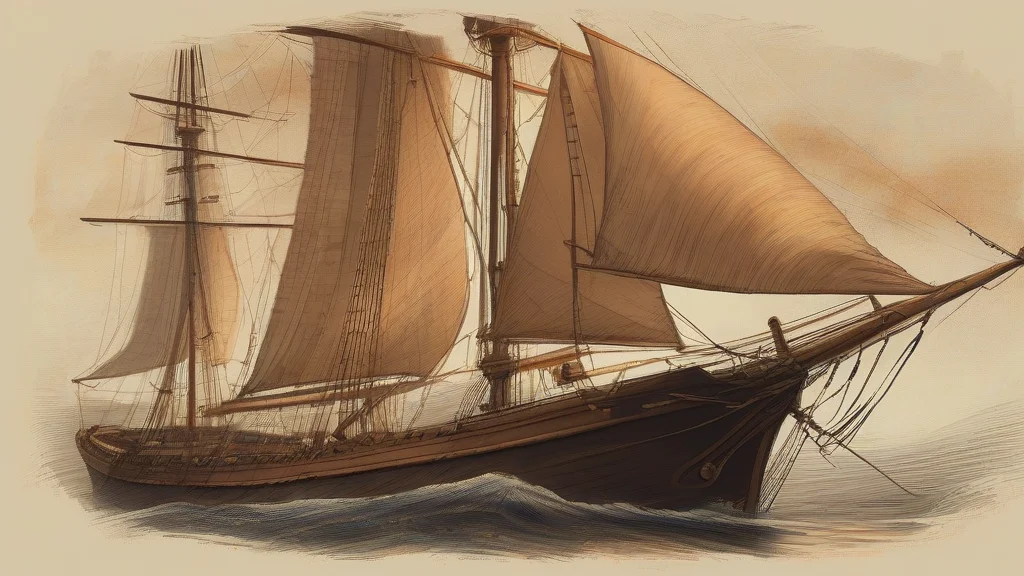
What does mizzenmast mean?
A mizzenmast is the mast on a sailing vessel that stands behind the mainmast. On a three-masted ship, it is the rearmost mast and usually carries the mizzen sail, a smaller sail set behind the main course. On some two-masted vessels, the mizzenmast can also carry sails that are set in light winds. The term is primarily nautical and appears in descriptions of ships, sailing vessels, rigging, and maritime equipment. Its name comes from the nautical term mizzen, meaning the sail or rigging associated with the after part of a vessel. Although largely associated with older sailing ships, the word remains standard in nautical and historical writing.
nounA mizzenmast is the mast of a sailing ship situated behind the mainmast, typically supporting the mizzen sail. On a three-masted vessel, it is the rearmost mast.
- The mast situated abaft the mainmast, especially on a two- or three-masted sailing vessel.
"The crew climbed the mizzenmast to inspect the rigging before the storm reached them."
"A lantern was hung from the mizzenmast so that it could be seen from the deck."
"The ship’s navigator used the height of the mizzenmast to help determine its position."
The plural is used when referring to more than one vessel or mast of this type.
"The two mizzenmasts rose above the harbor."
On a traditional sailing ship, the mizzenmast is the final step in the mast sequence, standing behind the mainmast and helping carry the vessel’s smaller after sail.
Reviewed by Deb Chak, Editor. AI-assisted content curated by RJS Tech Solutions LLP.
Where does mizzenmast come from?
The compound combines mizzen, an established nautical term for the after part of a ship or the sails and rigging associated with it, with mast. Mizzen itself developed from earlier English forms connected with the language of the sea, where cognates appear in several European languages. The compound mizzenmast became established in English nautical usage as the name for the mast carrying the mizzen sail.
How mizzenmast is actually used
This is a technical nautical term. It is normally written as one word and is chiefly used in descriptions of sailing vessels, rigging, and maritime history.