
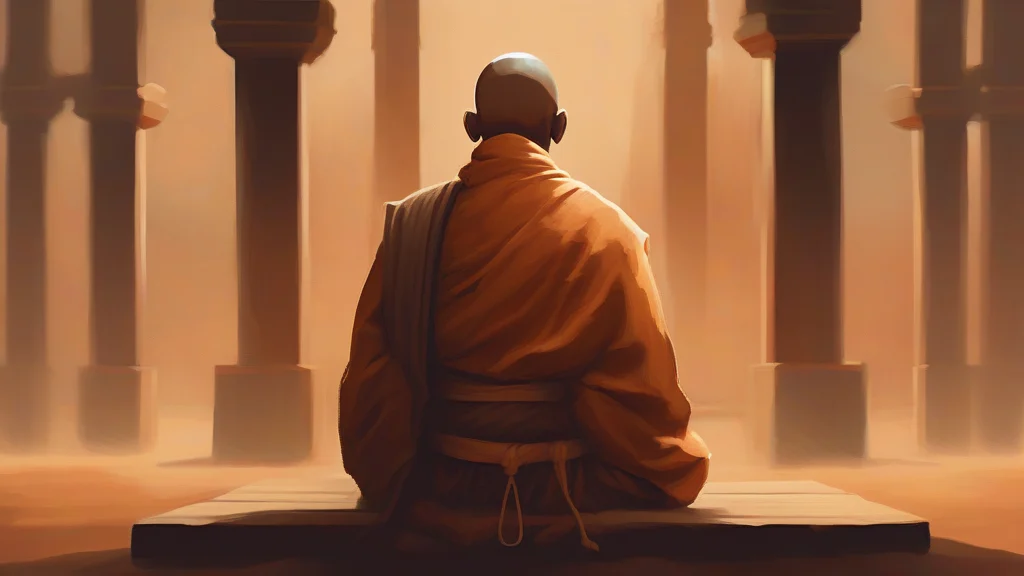
What does monkhood mean?
Monkhood means the state or condition of being a monk, with the emphasis on a life devoted to religious discipline, withdrawal from ordinary society, and service within a religious community. It may also refer collectively to monks as a body, rather than to one individual. The word is especially common in discussions of Buddhist religious life, where joining the monkhood can be a significant vocation, but it also has a long history in descriptions of Christian monastic communities. In literary and historical writing, monkhood can suggest renunciation, austerity, contemplation, and separation from worldly concerns. Although similar in meaning to monasticism, monkhood often focuses more directly on the personal status of being a monk, while monasticism can denote the broader movement, way of life, or system. The term is therefore particularly useful when discussing religious vocation, community identity, and the contrast between an ordinary life and a life dedicated to spiritual discipline.
nounThe state or condition of being a monk. It can also refer collectively to monks or to a monastic community.
- The state, condition, or status of being a monk.
- Monks or a monastic community considered collectively.
"After a year of travel, he entered the monkhood and began a life of study and contemplation."
"She was drawn to the solitude and discipline of Buddhist monkhood."
"The abbey was a center of learning and a symbol of the Benedictine monkhood."
Rare and usually countable when referring to distinct forms, communities, or traditions of monastic life; the singular is far more common.
"The study compares different monkhoods within the Buddhist traditions of Asia."
Monkhood is not merely a status: in its collective sense, it can name an entire community of monks.
Reviewed by Deb Chak, Editor. AI-assisted content curated by RJS Tech Solutions LLP.
Where does monkhood come from?
Monkhood is an English compound formed from monk and the suffix -hood, which expresses a state, condition, or quality. Monk comes through Old English monec from Late Latin monachus, a borrowing of Greek monachos, meaning “a solitary person.” The suffix -hood itself derives from Old English hād, “state, condition, or quality,” and is related to forms such as childhood and manhood.
How monkhood is actually used
The term is most common in religious, historical, and literary contexts. It is especially well established in discussions of Buddhism, while its use for Christian monastic life can sound formal or old-fashioned.