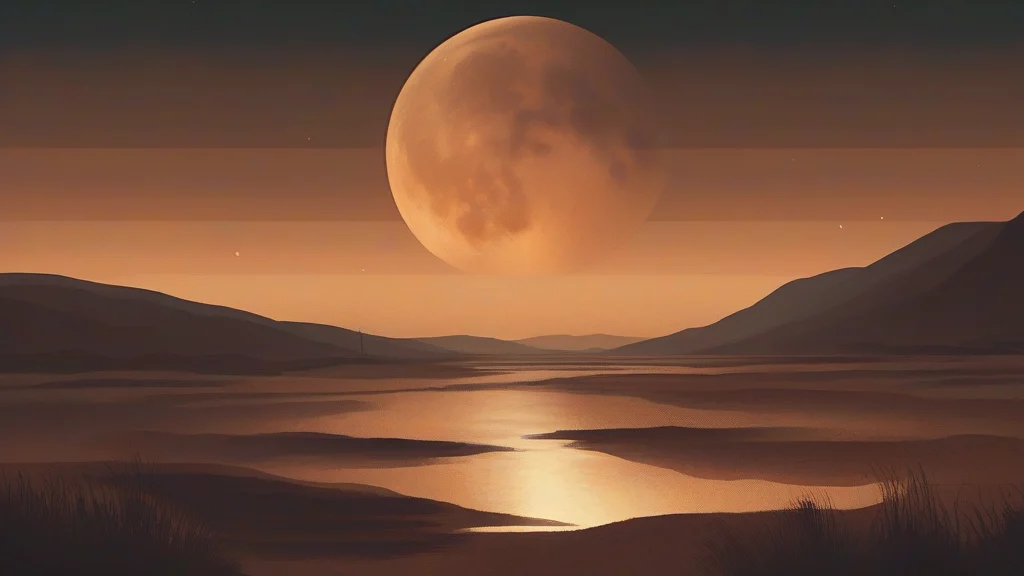
What does moonrise mean?
Moonrise refers to the moment or time when the moon appears above the horizon, marking the beginning of a lunar day. This natural phenomenon is often used in poetic or descriptive contexts to evoke a sense of wonder or natural beauty. The term can also refer to the act or process of the moon rising. Moonrise is commonly paired with 'sunrise' in discussions of celestial events, and is a popular subject for photographers and artists. Understanding moonrise can enhance one's appreciation of lunar cycles and the natural world.
nounThe moment or time when the moon appears above the horizon, typically at the beginning of a lunar day. The act or process of the moon rising.
- The time or moment of the moon's appearance
- The act of the moon rising
"The couple planned a romantic dinner at the beach to coincide with the moonrise."
"The tourists gathered on the hill to watch the moonrise over the mountains."
"The photographer timed her shot to capture the moonrise over the lake."
Used for multiple instances or occurrences.
"The almanac listed the moonrises for the entire month."
Reviewed by Deb Chak, Editor. AI-assisted content curated by RJS Tech Solutions LLP.
Etymology of moonrise
The term 'moonrise' combines 'moon', derived from Old English 'mōna', related to Proto-Germanic '*mēn-', and 'rise', from Old English 'rīsan', related to Proto-Germanic '*rīsan'. The compound word has been used in English since the 14th century to describe the lunar event.
How moonrise is actually used
Often used in poetic or descriptive contexts to evoke a sense of natural beauty or wonder. Commonly paired with 'sunrise' in discussions of celestial events.