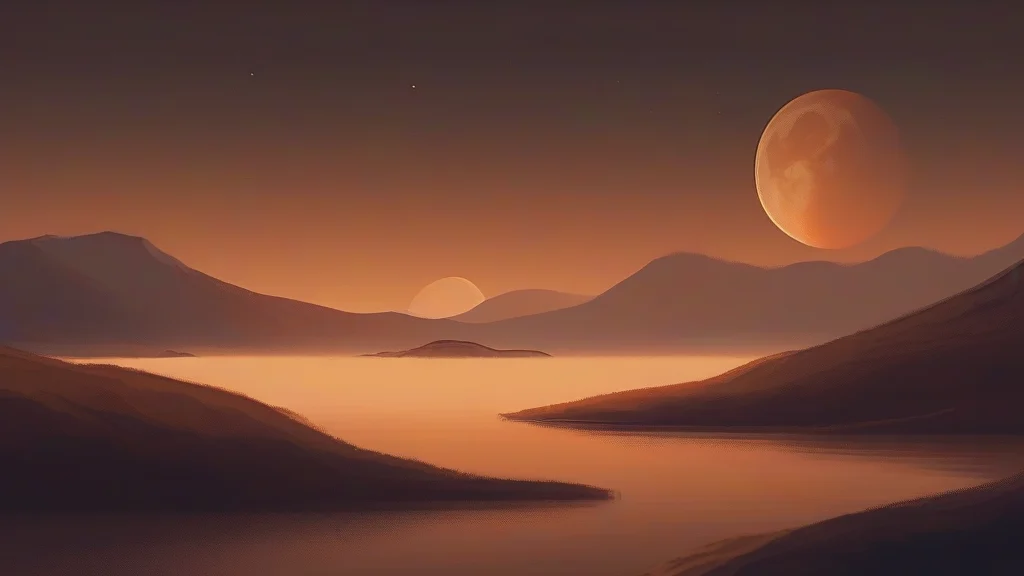
What does moonset mean?
Moonset refers to the moment when the Moon disappears below the horizon as the Earth rotates. This event marks the end of the Moon's visibility in the sky for a given location. Moonset is often a subject of interest in astronomy and photography, as it offers breathtaking views and unique opportunities to capture the Moon's interaction with the Earth's landscape. Similar to sunset, moonset can be observed from various vantage points and is influenced by the observer's location and the time of year. Understanding moonset times can enhance experiences for astronomers, photographers, and nature enthusiasts.
nounThe moment when the Moon disappears below the horizon as the Earth rotates, marking the end of the Moon's visibility in the sky for a given location.
- The event of the Moon setting below the horizon.
- A photograph or observation of the Moon at the moment it sets.
"The photographer waited for the moonset to capture the stars in the darkening sky."
"The tourists gathered to watch the moonset over the ocean."
"The moonset picture taken by the astronaut was widely shared on social media."
Used for multiple instances or occurrences.
"The calendar listed several moonsets during the month for optimal stargazing."
Reviewed by Deb Chak, Editor. AI-assisted content curated by RJS Tech Solutions LLP.
Etymology of moonset
The term 'moonset' is derived from 'moon' and 'set', with 'set' referring to the action of the celestial body disappearing below the horizon. The concept of observing and naming celestial events like moonset parallels that of 'sunset', reflecting human interest in tracking and appreciating natural phenomena.
How moonset is actually used
Often used in contexts related to astronomy, photography, and poetic descriptions of nature.