
What does moonshiner mean?
A moonshiner is a person who makes or sells moonshine, an illicitly distilled alcoholic spirit, especially one produced without government approval or taxation. In modern American usage, the word carries a legal and historical association with unlicensed distilling, smuggling, and backwoods liquor production. It also evokes the culture of rural and frontier America, where hidden stills and illicit whisky became familiar features of life, particularly during Prohibition. The word can sometimes be used more broadly for a bootlegger or illicit liquor dealer. In British English, moonshiner formerly had a wider historical meaning, encompassing smugglers and illicit traders. Although the term often has a disparaging or criminal connotation, it is also used neutrally in historical and cultural discussions, especially when describing traditional American distilling or literature and film about Prohibition-era moonshine producers.
A person who makes or sells moonshine, especially as an illicit or unlicensed distiller.
"The moonshiner was arrested after a federal agent discovered his hidden still."
Chiefly American English; often refers to someone who produces untaxed spirits outside legal regulation.
Historically, a smuggler or illicit trader, especially in British usage.
"The court records described him as a moonshiner who smuggled spirits into the country."
This sense is now chiefly historical in British English.
Used for multiple moonshiners.
"The authorities questioned several moonshiners operating in the remote valley."
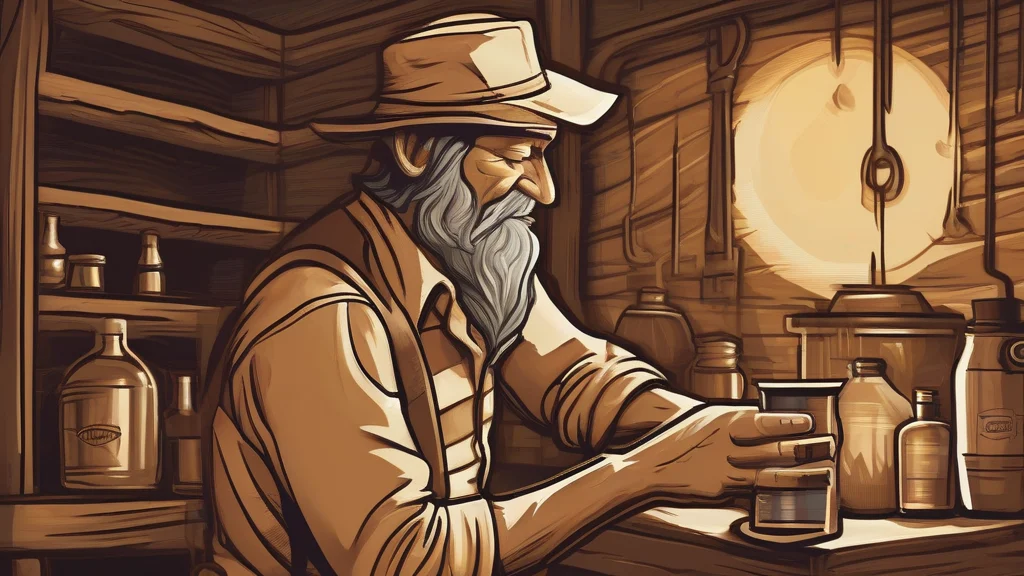
“Moonshiner” once described a hidden backwoods distiller whose still could turn clear corn liquor into something worth risking the law for.
Reviewed by Deb Chak, Editor. AI-assisted content curated by RJS Tech Solutions LLP.
Where does moonshiner come from?
Moonshiner is formed from moonshine, whose name refers to the belief that the making of illicit liquor was favored or concealed by moonlight. The word moonshine is an American English formation, with moonshine attested in the 19th century for illicitly distilled spirits. The agent suffix -er added the sense of a person who makes or sells the liquor. In British English, moonshiner also developed historical associations with smugglers and illicit traders.
Related word forms
How moonshiner is actually used
In contemporary American English, the word most often has a mildly disparaging or law-enforcement association because moonshining usually refers to unlicensed production. The British sense is largely historical. The term is also associated with American frontier culture, rural distilling, and Prohibition-era bootlegging.
Easily confused with moonshiner
Moonshine is the illicitly distilled liquor itself, whereas a moonshiner is the person who makes or sells it.