
What does mothball mean?
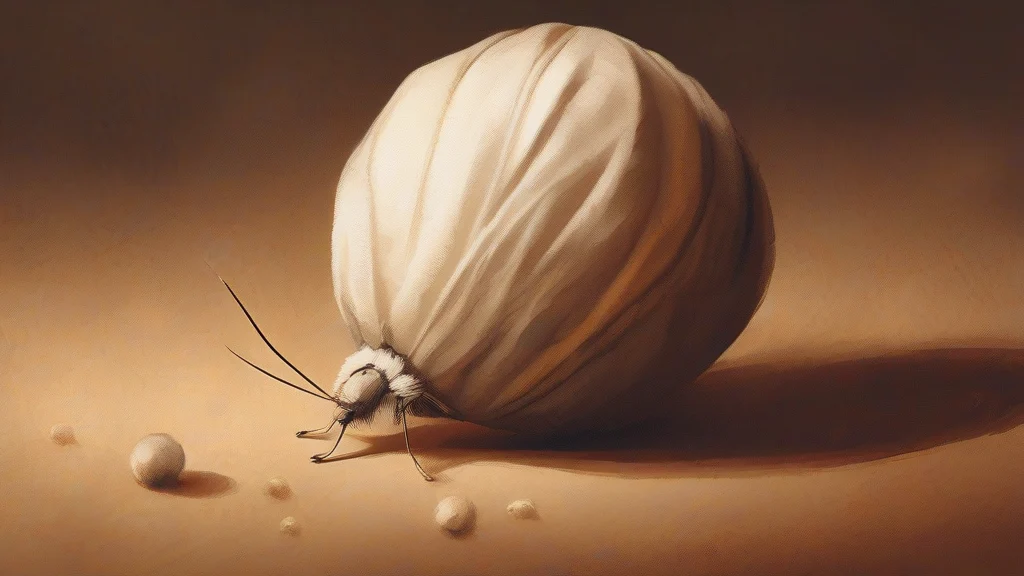
A mothball is a small piece of naphthalene or a similar chemical substance traditionally used to protect clothing, books, and other stored objects from clothes moths. Its name comes from the combination of “moth” and “ball,” describing its spherical form and its intended purpose. The word also has a figurative meaning: to mothball something is to place it in a dormant, protected, or temporarily unused state. Factories, ships, vehicles, and entire business operations can be mothballed when they are no longer needed but may later be restarted. This figurative use conveys not merely storage, but a deliberate interruption in activity, often with an implication that the situation may eventually be reversed. The expression is consequently common in industrial and economic reporting, where “mothballing” describes capacity taken out of service and the later “mothball effect” refers to difficulties reviving such capacity.
A small ball, pellet, or block of naphthalene or a similar substance used to repel or kill clothes moths.
"She placed a mothball in each sleeve of the winter coat."
Often used in the plural when referring to several chemical balls, especially in the phrase “in mothballs.”
A state of prolonged inactivity or temporary closure, especially of a factory or business.
"The plant remained in mothballs for nearly a decade."
The figurative sense is especially common in industrial, business, and economic contexts.
To put a factory, vehicle, or other equipment into a protected or inactive state for possible later use.
"The shipping company mothballed several vessels during the downturn."
This is figurative and usually implies that the subject may be returned to service later.
The standard plural of the noun; it is also the usual form in the idiomatic expression “in mothballs.”
"The equipment had been in mothballs since the factory closed."
A mothball preserves a factory's future while allowing its machinery to sit idle—and “mothballing” later became a vivid metaphor for economic inactivity.
Reviewed by Deb Chak, Editor. AI-assisted content curated by RJS Tech Solutions LLP.
Where does mothball come from?
The word is a compound of “moth” and “ball,” referring to a ball-shaped preparation used against moths. The chemical sense developed during the widespread use of naphthalene as a moth deterrent, while the figurative sense of temporarily closing or preserving something arose later in the 20th century. The element “ball” belongs to a wider word family that includes terms such as “ballet” and “ballade,” ultimately associated with the Latin word balla.
Related word forms
How mothball is actually used
The literal chemical sense is common in household and storage contexts. The figurative senses, especially “mothball a factory” and “be mothballed,” are especially associated with business, industry, and economics. In British usage, “put something in mothballs” is also idiomatic for storing it away for future use.
Easily confused with mothball
A moth is the insect, whereas a mothball is a chemical object used to protect clothing or stored goods from insects.