
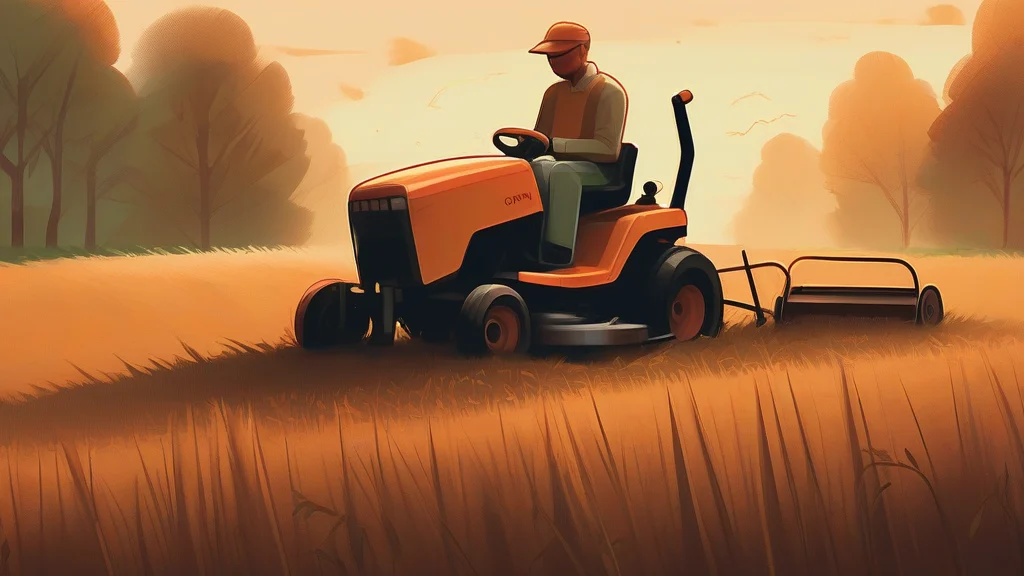
What does mow mean?
To mow is to cut grass, grain, or similar material with a mower, scythe, or other cutting tool. Its most common use is in ordinary garden and agricultural contexts, as in mowing the lawn or mowing a field. The activity is closely associated with maintaining a neat lawn and with seasonal work, making the word useful for describing both domestic routines and traditional rural labor. Mowing also appears in compounds such as mowing machine and in the familiar expression freshly mown grass, which refers to grass that has just been cut. Although the principal sense is agricultural, mow can also mean to grimace or make a contorted face, particularly in Scottish and northern English varieties. The word has a long history in English and is related cognate forms in several Germanic languages.
To cut grass, grain, or other material with a mower, scythe, or similar tool.
"We mow the grass whenever it becomes too long."
This is the dominant modern sense in British and American English.
To grimace or make a contorted face.
"He mowed and shook his head at the suggestion."
This sense is more limited and is especially associated with Scottish and northern English usage.
The past participle mown is especially familiar in the phrase freshly mown grass, where its regular sound pattern preserves an older English ending.
Reviewed by Deb Chak, Editor. AI-assisted content curated by RJS Tech Solutions LLP.
Where does mow come from?
The word comes from Old English māwan, meaning to cut grass or crops, and ultimately from a Germanic root associated with cutting or mowing. The modern English word developed alongside the agricultural practice of cutting hay and grain, while the related form mower names the machine used to perform the work. The verb's older participial form mown survives in expressions such as freshly mown grass, alongside the more regular mowed.
Related word forms
How mow is actually used
The dominant modern sense is to cut grass, and it is used in both British and American English. The sense meaning to grimace is more limited and is especially associated with Scottish and northern English usage.