
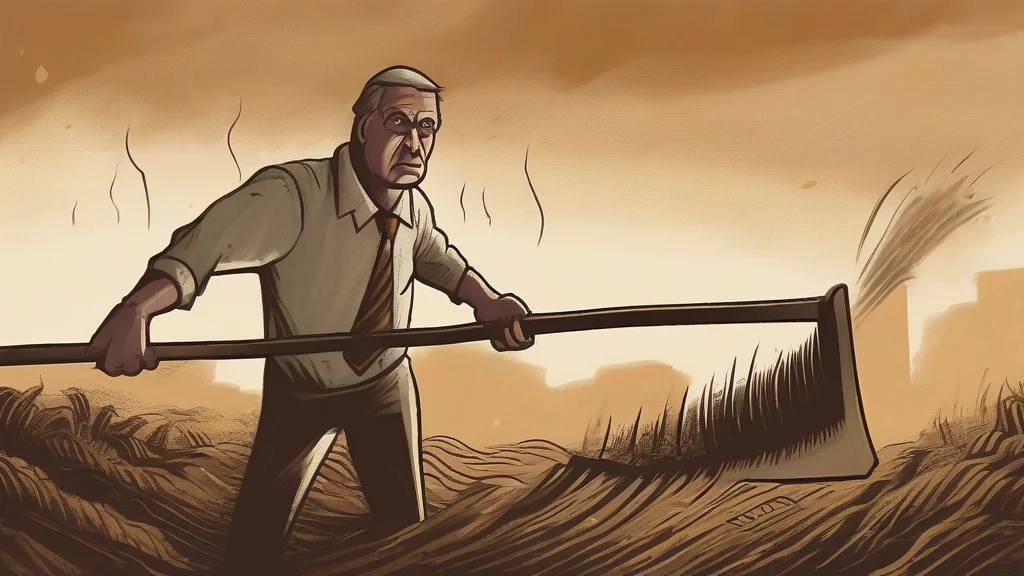
What does muckrake mean?
Muckrake is chiefly a verb meaning to investigate and expose corruption, misconduct, or other hidden wrongdoing, particularly in government and public life. Its connotation is critical rather than neutral: the word may suggest determined uncovering of secrets, but it can also imply sensationalism, intrusion, or a vigorous campaign of accusations. The word was originally associated with a tool—a rake used to gather manure and other waste. By the early twentieth century, its meaning had developed into a metaphor for investigative journalism. Publisher Theodore Drexel famously used the term in 1906 in connection with journalists who exposed political corruption, helping establish the modern sense. The related noun muckraker denotes such an investigator, while muckraking can describe investigative work or journalism. Although the figurative sense became particularly associated with American political reporting, the word and its original sense are also familiar in British English.
To search actively for and expose corruption, misconduct, or other hidden wrongdoing, especially in public life.
"Several journalists collaborated to muckrake the officials' financial records."
The expression can be approving when it denotes serious investigative journalism, but critical or dismissive when it suggests sensational reporting.
A person who investigates and exposes corruption or misconduct; also, a rake used to collect manure, dung, or other waste.
"The play portrays a fearless newspaper reporter who becomes a muckrake."
For the investigative role, muckraker is more common than muckrake.
The standard plural refers to multiple waste rakes or, less commonly, multiple people who expose wrongdoing.
"Workers used long-handled muckrakes to clear the stalls."
In 1906, publisher Theodore Drexel helped make "muckraking" a byword for sensational exposes of political corruption.
Reviewed by Deb Chak, Editor. AI-assisted content curated by RJS Tech Solutions LLP.
Where does muckrake come from?
Muckrake is a compound of muck and rake, originally denoting a rake used to gather manure or other waste. The figurative sense developed from the idea of searching through dirty material to uncover what was hidden. In 1906, Philadelphia publisher Theodore Drexel used the term "muck-raking" in connection with journalism that exposed political corruption, thereby giving the word much of its modern force.
Related word forms
How muckrake is actually used
The verb is strongly figurative and often critical: it can suggest determined investigative work, but also sensationalism or intrusion. A person engaged in exposing wrongdoing is more commonly called a muckraker.