
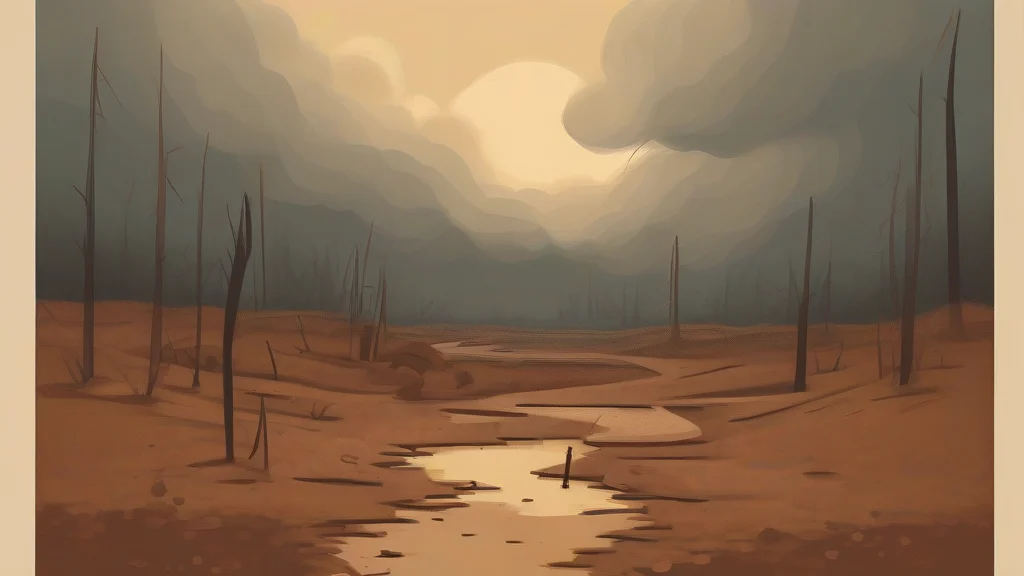
What does muddied mean?
Muddied means covered in mud or otherwise dirty with it, as in a muddy road or muddy shoes. It can also describe information, ideas, or a situation that has been made unclear or confusing. In this figurative sense, the word suggests that clarity has been lost or deliberately obscured, as in the expression "muddied the waters." A third use describes a person whose thinking is confused, although "muddled" is often more natural for that meaning. The word is especially useful when discussing literal messiness, but it can carry a formal, slightly critical tone when applied to writing, evidence, or discussion. Its vivid image of mud spreading through clear water makes it an effective metaphor for confusion and obscured understanding.
Covered in, containing, or contaminated with mud; dirty with mud.
"The truck was muddy after driving through the wet field."
The literal meaning is common in descriptions of roads, clothing, vehicles, water, and land.
Made unclear, obscure, or difficult to understand or interpret.
"The lack of context muddied the findings."
This figurative use is formal and often appears with subjects such as evidence, information, discussion, or waters.
To cover or make dirty with mud; also, figuratively, to make something unclear or confusing.
"The rain muddied the trail, and the driver muddied the issue by withholding details."
In the figurative sense, this verb often appears in the expression "muddy the waters."
A word can be literally muddied—or made harder to think about by muddying the waters.
Reviewed by Deb Chak, Editor. AI-assisted content curated by RJS Tech Solutions LLP.
Where does muddied come from?
The word comes from the English noun "mud," with the suffix "-y" forming the adjective "muddy" and the inflected form "muddied." The verb "muddy" developed from the adjective and means to cover or make dirty with mud. Related forms such as "muddle" and "muddiness" belong to the same broad mud-based word group.
Related word forms
How muddied is actually used
The adjective and past-participle form is common in both literal and figurative contexts. Figurative uses such as "muddied the waters" are formal and imply that something has been made less clear or more confusing.
Easily confused with muddied
Muddled usually describes confusion in a person's thinking or speech, whereas muddied more often describes something physically covered in mud or figuratively made unclear.