
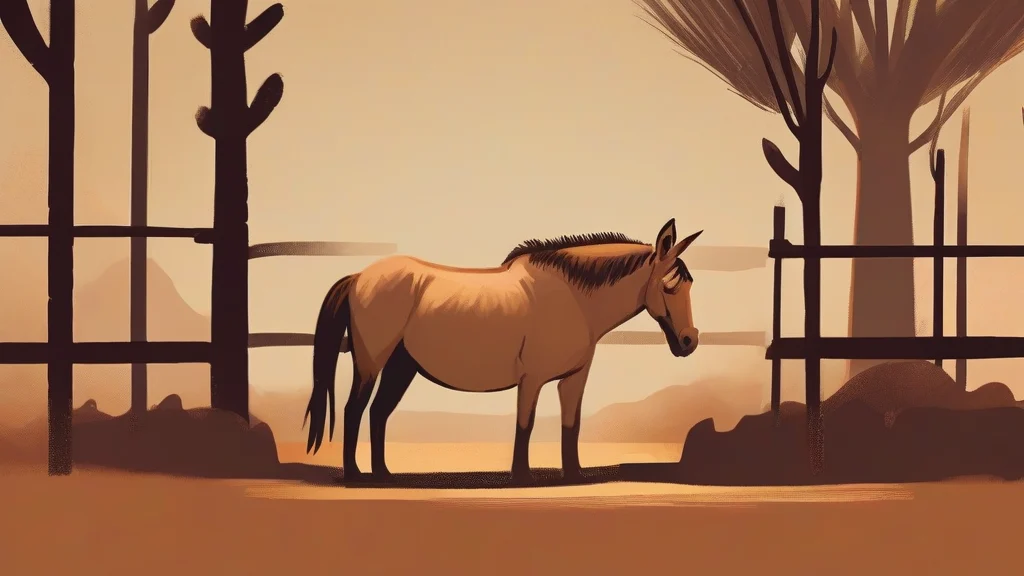
What does mule mean?
The word mule most commonly refers to the hybrid offspring of a female horse and a male donkey. Mules are traditionally valued for their strength, endurance, calm temperament, and ability to work on rough terrain, and they have long been used to carry loads or pull carts. Because mules are famously independent and resistant to direction, the word also describes a stubborn or hard-working person. The expression “stubborn as a mule” is its best-known figurative use. In informal American English, mule has also been used for money, while the word can denote a backless slipper. As a verb, mule means to toil or work hard, though this usage is less common today. Across these senses, mule combines a practical association with hard work with a memorable reputation for obstinacy.
A mule is primarily a hybrid offspring of a female horse and a male donkey, valued for strength and endurance. The noun also means a stubborn or hard-working person, money, or a backless slipper.
"The farmer hitched the gray mule to the cart."
The money sense is informal and chiefly American; the person sense can be affectionate or insulting depending on tone.
To mule is to work hard, toil, or labor, especially at a demanding or unpleasant task.
"She mules through the paperwork after everyone else has gone home."
This verb is uncommon and sounds somewhat old-fashioned or literary.
The regular plural of the animal noun is mules.
"A line of mules waited outside the trading post."
A mule carries heavy loads but refuses to be hurried, which is why “stubborn as a mule” has endured for centuries.
Reviewed by Deb Chak, Editor. AI-assisted content curated by RJS Tech Solutions LLP.
Where does mule come from?
English mule came through Old French mule from Latin mulus, the Latin word for a mule. Latin also had the related form mulio, and English later developed forms such as mulish and muleteer from the same word family. The animal’s useful but difficult-to-control nature helped establish the long-standing figurative sense of stubborn resistance.
Related word forms
How mule is actually used
The animal sense is the most established and widely understood. “Mule” as a term for a person is informal and can sound affectionate, humorous, or disparaging depending on context. The money sense is chiefly informal and regional, while the verb “mule” is relatively uncommon and literary or old-fashioned. Mules are generally sterile.
Easily confused with mule
A mule is a hybrid offspring of a horse and a donkey, whereas a muley is a castrated male bovine, especially a bull or ox.