
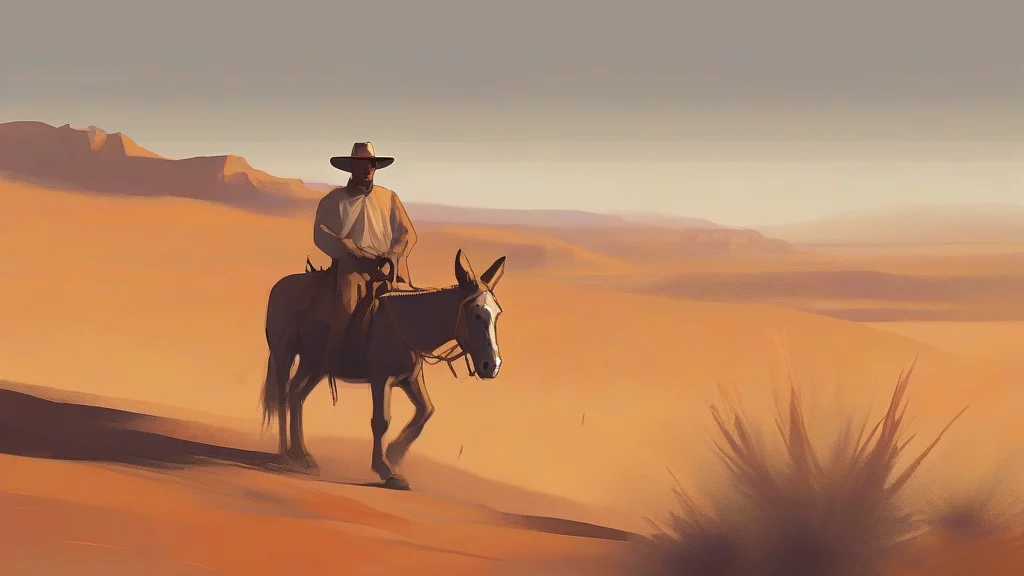
What does muleteer mean?
A muleteer is a person who drives or looks after mules, particularly as part of a journey or the transport of goods. In earlier periods, muleteers were important workers wherever pack animals carried supplies over roads that vehicles could not easily manage. Their duties included loading and securing the animals, guiding the train, caring for the mules, and protecting the cargo. The word often carries a historical or rural atmosphere and can suggest a rugged, practical form of travel. Today it appears especially in writing about frontier life, old trade routes, expeditions, and the history of transport. Although “mule driver” is a straightforward modern alternative, “muleteer” remains a vivid occupational term that conveys the tradition and physical skill associated with working with mules.
nounA person whose work is to drive or care for mules, especially when transporting goods. The term is also used historically for a person who travels with a mule train.
- A person who drives, tends, or transports goods using mules.
"The muleteer guided the animals along the narrow mountain track while the cargo was loaded behind them."
"An experienced muleteer knew how to keep the animals calm on the rough journey."
"The old account describes a muleteer leading a train through the desert."
The standard plural of muleteer.
"Several muleteers guided the caravan across the plateau."
Before trucks, one of the great transport workers was the muleteer, whose carefully managed mule trains moved supplies over difficult terrain.
Reviewed by Deb Chak, Editor. AI-assisted content curated by RJS Tech Solutions LLP.
Where does muleteer come from?
The English word comes from Spanish muletero, meaning a muleteer or keeper of mules. It is derived from mulero, a mule driver, ultimately from mulo, the Spanish word for a mule; mulo comes from Latin mulus. English mule also continues the Latin word through Old French. The occupational term entered English during the early modern period when mule-based transport was widely used.
Related word forms
How muleteer is actually used
The word is chiefly associated with rural, frontier, or historical transport and may sound old-fashioned in modern contexts. It is still used in descriptions of historical routes, journeys, and working animals.