
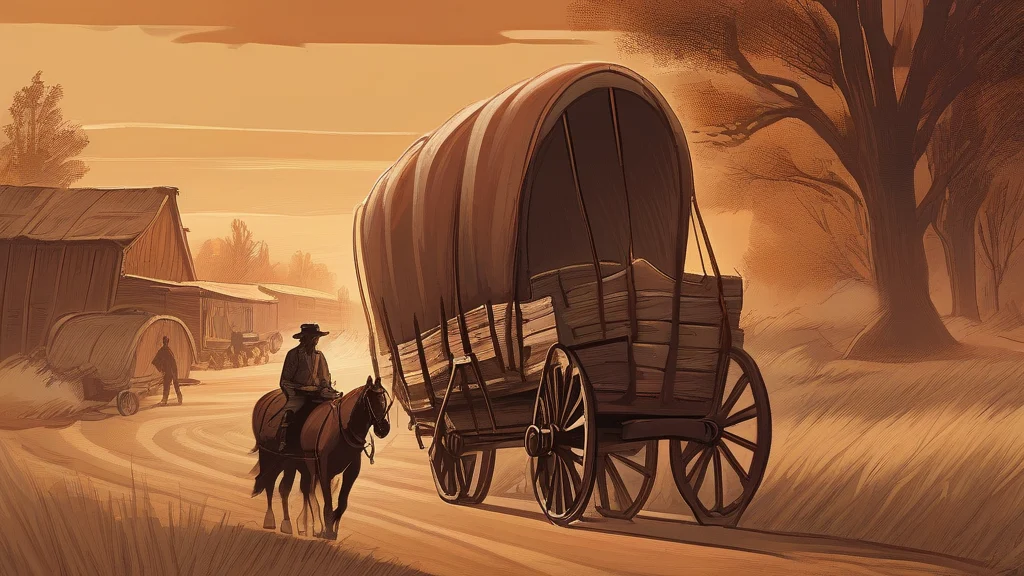
What does wagoner mean?
A wagoner is someone who drives, guides, or looks after a wagon, particularly one pulled by horses or another animal. In modern English, the word most often evokes rural and military transport from before motor vehicles became widespread: a wagoner might drive a cart of produce to market or accompany a military column to move supplies. Its meaning is straightforward, but its historical associations give it a traditional, slightly nostalgic tone. In ordinary contemporary speech, driver or teamster is usually more natural in American English, while coachman may be preferred when the driver is formally associated with a carriage. Wagoner is nevertheless useful when describing an older occupation, a historical scene, or the practical responsibility involved in keeping wagon transport moving.
nounA wagoner is a person who drives, guides, or transports goods by wagon, especially one who drives a wagon drawn by horses or other animals.
- A person who drives or guides a wagon, especially a horse-drawn wagon.
- A person responsible for transporting goods or supplies by wagon, including a historical military wagon driver.
"The wagoner guided the heavy cart along the muddy road."
"The wagoner carefully negotiated the narrow path while the load shifted inside the wagon."
"During the military campaign, each wagoner was responsible for keeping the supply wagons moving."
The regular plural is wagoners, used for multiple wagon drivers or for the members of a group of people responsible for wagons.
"The wagoners led the animals along the muddy track."
Before trucks and railways, the wagoner was the vital link between producer and market, guiding horse-drawn loads over roads that could become impassable in bad weather.
Reviewed by Deb Chak, Editor. AI-assisted content curated by RJS Tech Solutions LLP.
Where does wagoner come from?
Wagoner is an English formation in which the agent suffix -er has been added to wagon. The word wagon comes through Middle English from Middle Dutch wagen, a Germanic word related to cognates such as German Wagen. As wheeled transport developed a specialized driver, wagoner came to denote the person who handled or transported goods by wagon; in historical military usage, the role also included responsibility for wagon trains and supplies.
How wagoner is actually used
The word is somewhat old-fashioned compared with the general terms driver and coachman. It can sound historical, literary, or traditional rather than contemporary, although it remains understandable in both British and American English.