
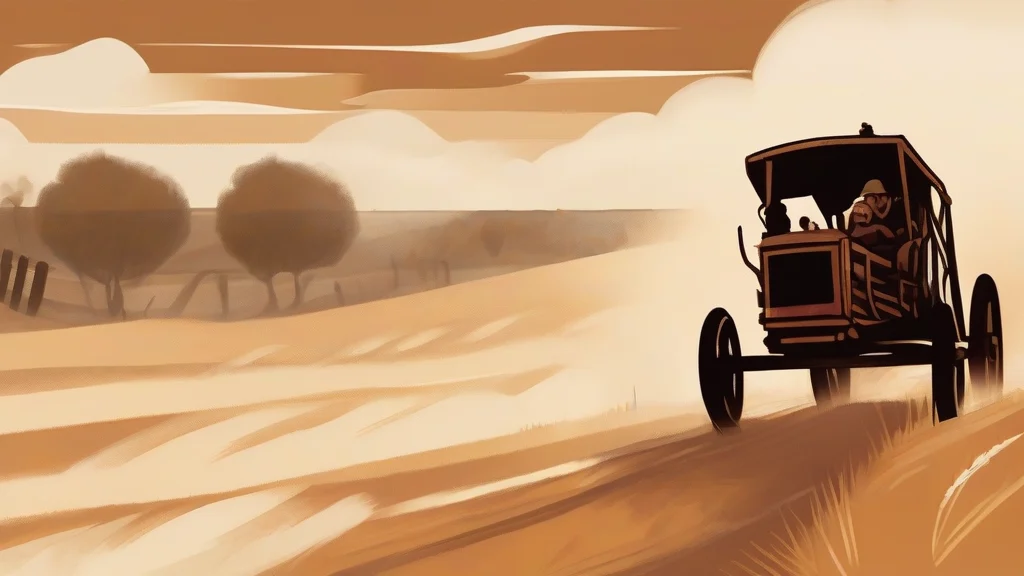
What does waggoner mean?
A waggoner was a person who drove or carried goods in a wagon, often supervising the vehicle and the animals pulling it. The term was especially associated with commercial transport before motor lorries became widespread and is now encountered mainly in historical accounts, older literature, and occupational records. In that context, a waggoner might be responsible for moving grain, timber, merchandise, or other heavy loads over rural roads, sometimes as part of a larger team rather than working alone. The word is closely related to the alternative spelling wagoner and should not be confused with a wagonwright, who builds or repairs wagons. Although largely dated in ordinary modern usage, it provides a vivid glimpse of an earlier transport economy in which the movement of goods depended on skilled handlers, draft animals, and maintained roads. Its historical flavor also distinguishes it from the more general modern word driver.
nounA person who drove or transported goods in a wagon, especially a carrier responsible for a wagon and its team of animals.
- A person who drove or transported goods in a wagon.
"The old stagecoach line relied on a waggoner to manage the team of horses."
"The old stagecoach line relied on a waggoner to manage the team of horses."
"In the village archive, the ledger records payment to a waggoner for carrying grain to market."
The regular plural is waggoners; the term is chiefly used in historical and occupational contexts.
"The account lists two waggoners who transported goods along the valley road."
A waggoner was the horse-powered version of a delivery driver, carrying commercial loads long before parcel tracking existed.
Reviewed by Deb Chak, Editor. AI-assisted content curated by RJS Tech Solutions LLP.
Etymology of waggoner
Waggoner was formed from waggon with the agent suffix -er, identifying a person associated with or operating a wagon. Waggon and wagon are late Middle English continuations of a Germanic word for a cart, represented in English by Old English wæg and in Middle Dutch by wagen. Wagoner and waggoner developed as variant forms of the occupational noun, with the doubled-consonant spelling particularly associated with British and older English usage.
Related word forms
How waggoner is actually used
Waggoner is now chiefly historical, literary, or occupational-archival rather than everyday. It denotes a person associated with wagon transport, not necessarily the owner of the vehicle.
Easily confused with waggoner
Wagoner is an alternative spelling of the same historical noun and carries the same meaning as waggoner.