
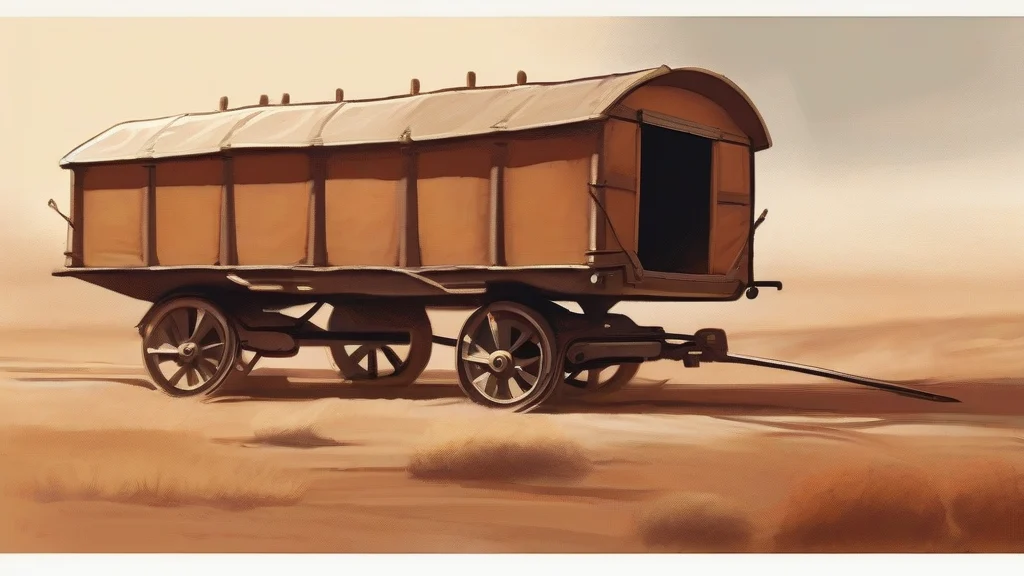
What does waggon mean?
Waggon is a traditional English spelling and noun for a wagon, especially a four-wheeled vehicle used for carrying loads or passengers. It is encountered mainly in British and American writing that deliberately preserves an older register, such as historical novels, rural nostalgia, and traditional branding. The double-g spelling has a mildly antiquarian flavor, so modern prose normally uses wagon. Waggon can also function as a dated transitive verb, meaning “to transport in a wagon,” as in accounts of farmers moving produce to market. Its usefulness as a vocabulary word lies in this marked contrast between form and meaning: it is not merely another name for a cart or carriage but a spelling that signals period language and traditional cultural associations. The word remains readily understood in both British and American English, yet most contemporary speakers would choose wagon in ordinary use.
A wagon or cart, especially a four-wheeled vehicle drawn by animals and used for carrying loads.
"A horse-drawn waggon waited outside the inn."
Dated or traditional in contemporary use, with a historical or nostalgic flavor.
To transport people or goods in a wagon.
"The farmers waggoned the harvest to market."
Strongly dated and chiefly found in historical or period writing.
The standard plural of the noun.
"The two waggons were loaded before sunset."
Waggon is wagon with a literary accent: the same meaning, but it immediately places the scene in an older register.
Reviewed by Deb Chak, Editor. AI-assisted content curated by RJS Tech Solutions LLP.
Where does waggon come from?
The word entered English in the early 16th century from Dutch wagen, a descendant of Proto-Germanic *wagnaz, meaning “cart” or “wagon.” English later established waggon as a spelling variant of wagon, alongside the now-dominant form wagon. Its relatives include English wain, German Wagen, and Swedish vagn.
Related word forms
How waggon is actually used
The noun has an old-fashioned, rural, historical, or nostalgic tone. The verb is even more strongly associated with period writing and historical accounts.
Easily confused with waggon
Waggon and wagon normally denote the same thing; waggon is a dated or traditional British spelling, whereas wagon is the standard modern spelling in British and American English.