
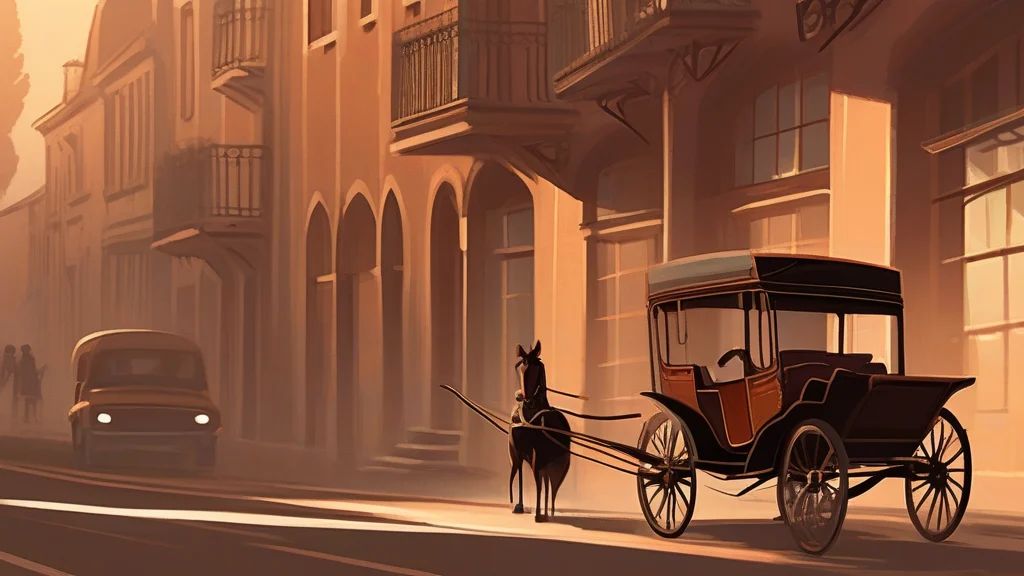
What does waggonette mean?
A waggonette is a small, light carriage or wagon, generally with four wheels and often a hood or canopy. Its name combines “waggon” with the diminutive suffix “-ette,” so the word literally suggests “a little wagon.” The term is chiefly British in origin and was especially common in the nineteenth and early twentieth centuries, when such vehicles served for sightseeing, touring, and private transport before and alongside the rise of the motor car. Today it survives mainly in historical writing, period descriptions, collectors’ terminology, and nostalgic contexts. Although it remains readily understandable, using “waggonette” in ordinary modern prose usually gives a sentence an archaic or picturesque flavor. It should not be confused with a wagon or carriage generally: the ending marks a smaller and more specific kind of vehicle. The word is therefore useful to anyone reading nineteenth-century travel accounts or discussing vintage transport, and can add historical specificity where a broader term such as “carriage” would be less exact.
nounA small, light four-wheeled carriage or wagon, typically carrying passengers and often fitted with a hood or canopy.
- A small, light four-wheeled passenger carriage or wagon, often with a hood or canopy.
"The family hired a waggonette for a tour of the countryside."
"The children climbed into the waggonette for a ride through the park."
"The exhibition included a restored motor waggonette from the early twentieth century."
The regular plural adds -s to the final -e.
"Two restored waggonettes took part in the parade."
Little wagon by name: the diminutive ending -ette turns a waggon into a compact passenger carriage.
Reviewed by Deb Chak, Editor. AI-assisted content curated by RJS Tech Solutions LLP.
Where does waggonette come from?
Waggonette was formed in English by combining waggon with the French-derived diminutive suffix -ette, giving it the sense of a small wagon or carriage. Waggon and wagon continue the same Germanic word, although the double-g spelling is especially associated with traditional British usage. The compound reflects the nineteenth-century fashion for forming names of small versions of larger vehicles with -ette.
How waggonette is actually used
Now chiefly a historical or nostalgic term, especially associated with sightseeing and passenger transport before and during the early motor-car era. The spelling wagonette is also used, particularly in American English.
Easily confused with waggonette
A waggon is a vehicle chiefly used for carrying goods, whereas a waggonette is a smaller passenger carriage or light wagon.