
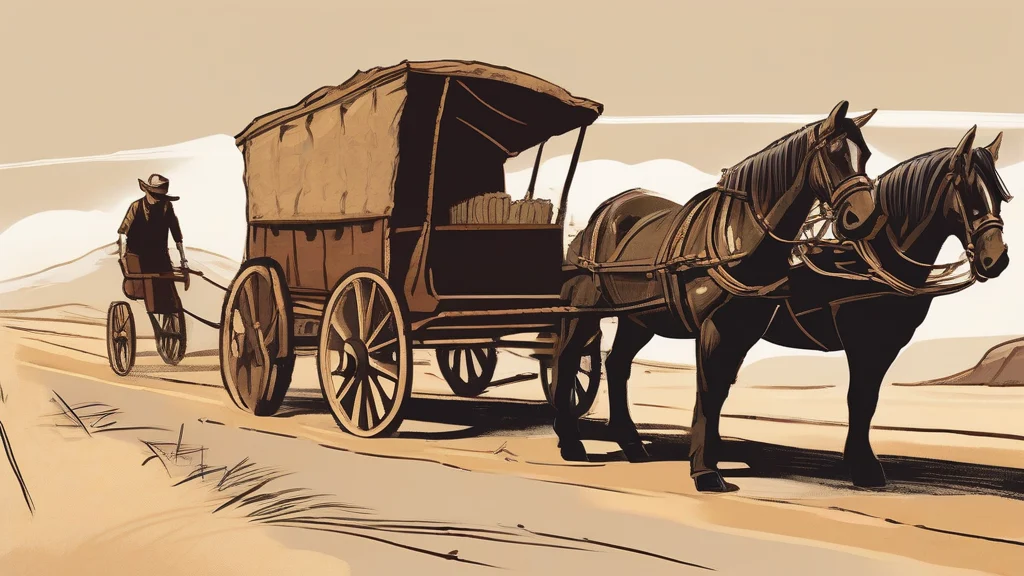
What does wain mean?
Wain is an archaic English noun denoting a wagon, cart, or farm vehicle. It appears especially in older literature, historical descriptions, and regional speech, where it often conveys a traditional or rural setting. A familiar example is the hay wain, a wagon used to transport hay or other crops. The word has a second, distinctive use in the name Charles's Wain, an old designation for Ursa Major, the Great Bear constellation. Although wain is no longer common as an everyday synonym for wagon, it remains useful because it preserves older vocabulary and gives historical or literary prose a period character. It should not be confused with wane, which means to diminish and is also the name of a lunar phase. In modern writing, wain is most appropriate when deliberately evoking historical, rural, or archaic contexts.
An archaic wagon, cart, or farm vehicle.
"The farmer harnessed the horse to the wain."
Now chiefly literary, historical, or dialectal; normally replaced by wagon or cart in modern standard English.
An old name for the constellation Ursa Major, the Great Bear.
"The stars of Charles's Wain wheeled around the pole."
Usually capitalized and encountered chiefly in the name Charles's Wain.
The plural is rare and appears mainly in archaic or historical contexts.
"Several laden wains followed the muddy road."
From an ordinary farm wagon to Charles's Wain, this old word points to both the road and the stars.
Reviewed by Deb Chak, Editor. AI-assisted content curated by RJS Tech Solutions LLP.
Where does wain come from?
Wain descends from Old English wægn, meaning a cart or wagon, and passed into modern English through Middle English. It is cognate with wagon and with forms such as German Wagen and Dutch wagen, all reflecting a Germanic term for a vehicle. The modern spelling wain became established while wagon continued as the more familiar modern English form.
Related word forms
How wain is actually used
Wain is now uncommon in standard modern English but survives in literary, historical, and some dialectal usage. The astronomical sense is normally capitalized.
Easily confused with wain
A wain is a wagon or cart, whereas a wane is something that diminishes or refers to a phase of the moon.