
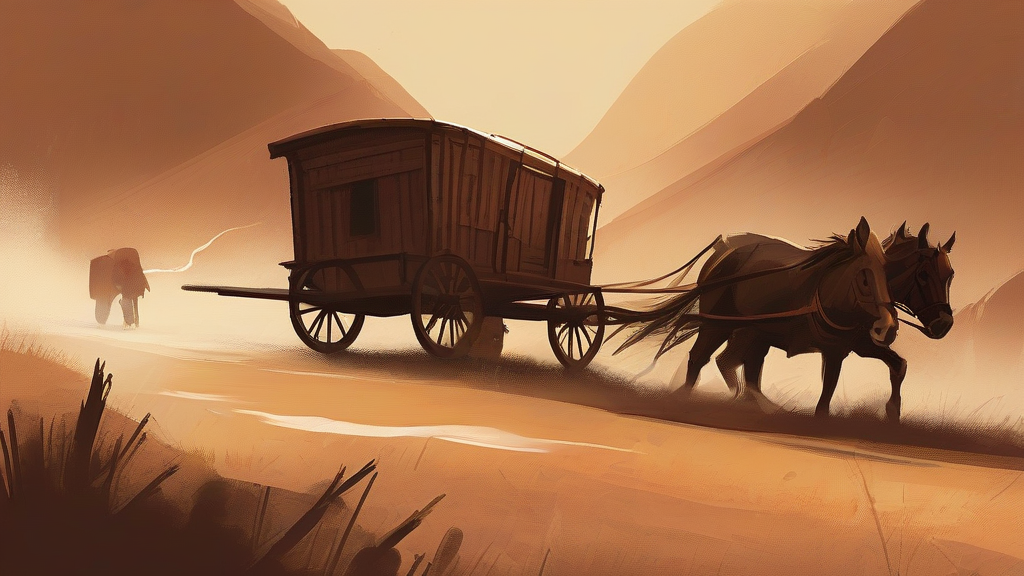
What does wagonage mean?
Wagonage denotes the transportation of freight by wagon and, by metonymy, the goods transported in that way. The word is formal and now uncommon, but it was once ordinary in trade, railway, and legal language, especially in Britain, and is also recorded in historical American usage. In its first sense, wagonage describes the operation itself: loading goods onto wagons, hauling them, and arranging or charging for their carriage. In its second, it names the consignment or freight carried that way. The suffix -age turns wagon into a noun denoting a process, paralleling other -age nouns that name an activity or its result. Wagonage is more specific than transport or freight because it identifies conveyance by wagon. Although little used in everyday speech, it is useful in historical reading and precise commercial contexts, where it distinguishes wagon-borne goods from freight moved by other means.
nounTransportation of goods by wagon; also, the freight or goods carried in this way.
- Transportation of goods by wagon.
- The freight or goods transported by wagon.
"The company charged extra for wagonage beyond the railhead."
"The merchant arranged for the wagonage of the goods to the nearest railway station."
"Heavy wagonage was delayed when the road became impassable."
Wagonage is normally used as a mass noun, so a plural is uncommon and generally distinguishes separate consignments or amounts of freight.
"The ledger recorded three separate wagonages to different railway stations."
In wagonage, the wagon is the vehicle, while the -age names the trade of moving freight.
Reviewed by Deb Chak, Editor. AI-assisted content curated by RJS Tech Solutions LLP.
Etymology of wagonage
Wagonage was formed in English from wagon and the suffix -age, which forms nouns denoting an action, process, or result. It is recorded from the early 17th century in the sense of transportation by wagon and later came to denote the goods or freight carried. Related forms include wagoner, while the historical spelling waggonage preserves the older double-g spelling of wagon.
How wagonage is actually used
Wagonage is formal, uncommon, and largely historical. It is especially associated with British commercial, transport, and railway usage, although it also occurs in historical American English.
Easily confused with wagonage
Waggonage is a historical spelling variant of wagonage rather than a separate word or meaning.