
What does muller mean?
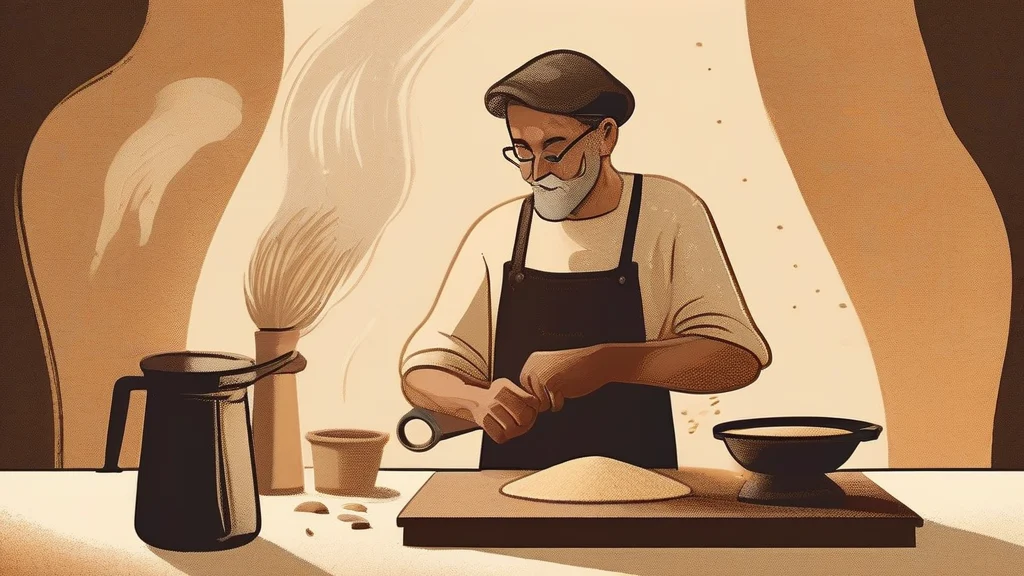
Muller is an uncommon English noun with two related historical and technical uses. In its older occupational sense, it means a miller: a person who operates machinery for grinding grain or other material. This use now sounds archaic or historical, and the ordinary modern word is miller. In specialist contexts, especially pottery, pigment preparation, and mineral processing, a muller is a heavy stone or other implement used to crush, grind, or mix substances. The two senses reflect the word's long connection with mills and the broader idea of reducing materials to a finer form. Although modern speakers are more likely to use miller, grinder, mortar, or pestle, muller remains useful when a source specifically identifies the traditional person or a particular grinding implement. Its rarity gives it an unusual, partly industrial character, preserving a technical term that connects everyday historical vocabulary with craft and manufacturing processes.
A person who operates a mill, especially one who grinds grain into flour; chiefly historical.
"Records from the period identify him as a miller and owner of the local mill."
Archaic in modern English; miller is the usual contemporary term.
A heavy stone or implement used to crush, grind, or mix materials.
"The artisan rolled the muller over the pigment until it became smooth and uniform."
A specialist term used in pottery, mineral processing, and related fields.
The standard plural of the noun; this form is most likely to occur in technical descriptions of grinding tools.
"Two stone mullers were used to prepare the mineral samples."
One word can name both the person who works a mill and the heavy stone used to grind materials.
Reviewed by Deb Chak, Editor. AI-assisted content curated by RJS Tech Solutions LLP.
Where does muller come from?
In the occupational sense, muller is a historical English variant of miller, which derives from Old English mylnere, an agent noun meaning a worker at a mill. These words ultimately connect with the same ancient Indo-European root associated with grinding or milling. The technical sense for a heavy grinding implement developed through the word's long-established connection with mills and the grinding of materials.
Related word forms
How muller is actually used
The occupational sense is archaic in modern English and is usually expressed by miller. The tool sense is specialist, occurring in contexts such as pottery, mineral processing, and materials preparation.
Easily confused with muller
A miller is the usual modern word for someone who operates a mill, whereas muller is chiefly historical and may also refer to a grinding tool.
A mortar is a vessel in which substances are ground with a pestle, while a muller may itself be the heavy grinding implement used to reduce or mix solid materials.