
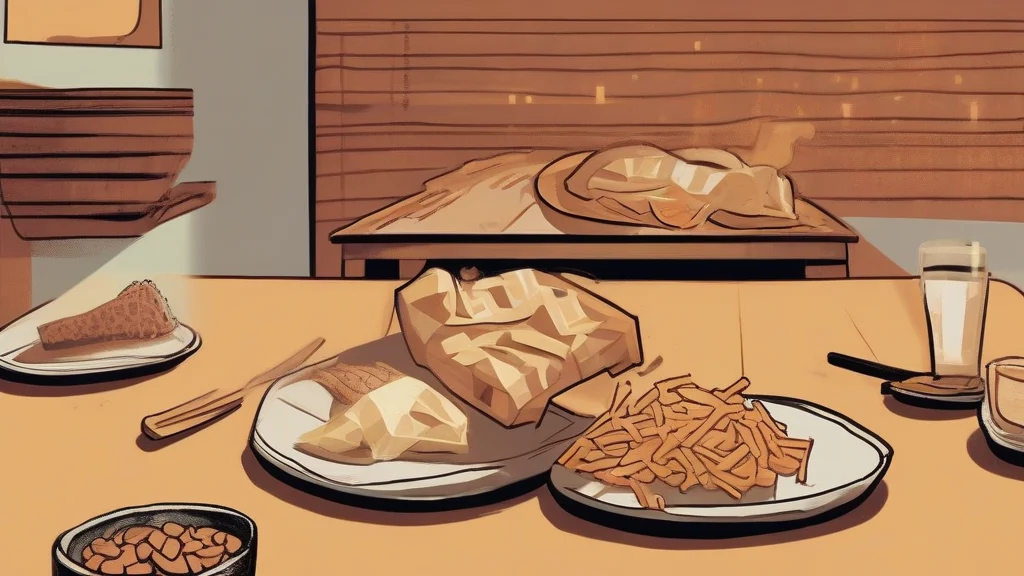
What does munch mean?
Munch means to eat food with steady, deliberate, often audible chewing. It is especially associated with taking repeated bites and chewing them thoroughly, and expressions such as munch on and munch away at make the action feel sustained rather than hurried. The verb is informal but widely understood in both British and American English; depending on tone, it can be playful, affectionate, or slightly critical, as when describing someone eating too quickly or noisily. Munch also has a rare noun use for an instance or sound of munching, although the verb is overwhelmingly the ordinary form. The word is useful because it captures a particular eating manner, not merely eating in general: it suggests visible, rhythmic effort at the teeth. In descriptions of films, cartoons, or comics, munching can communicate a comic sense of appetite, while in ordinary conversation it often gives a snack a leisurely, concentrated atmosphere. Alongside verbs such as chew and crunch, munch offers a more vivid way to present what someone is doing with food.
To eat food with steady, deliberate, often audible chewing.
"The boy munched each carrot before moving on to the next."
Common in informal British and American English. It can suggest unhurried, concentrated eating, but it may also carry a humorous or mildly critical tone.
An instance or sound of munching.
"A loud munch came from the other side of the table."
A relatively rare nominal use; the verb is much more common.
Used for separate instances or sounds of munching, although the verb is the word's predominant form.
"Quick munches of the crunchy snack echoed through the room."
Say “munch” and a plain snack suddenly sounds like a small, noisy event.
Reviewed by Deb Chak, Editor. AI-assisted content curated by RJS Tech Solutions LLP.
Related word forms
How munch is actually used
Informal and widely understood. It can be playful or mildly critical, especially when describing someone eating noisily, slowly, or with concentrated appetite.