
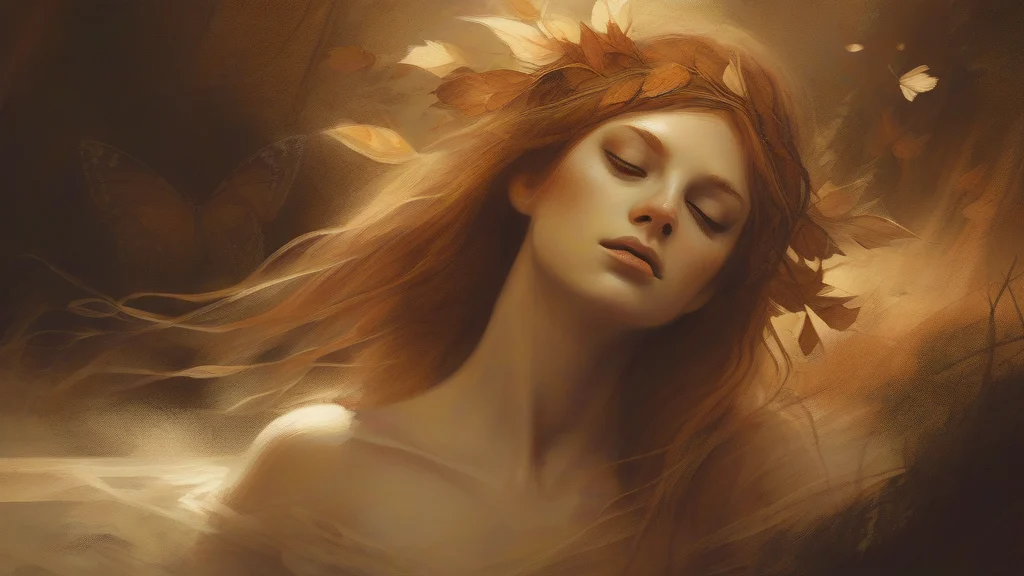
What does nymph mean?
A nymph is most commonly a female spirit from classical mythology, associated with forests, mountains, rivers, and other natural places. Such nymphs are usually portrayed as beautiful, supernatural beings who embody the character of the landscape in which they live. In literature, the word can also describe an idealized young woman, though this use may sometimes imply objectification. In biology, a nymph is the immature stage of certain insects, including dragonflies and mayflies; it resembles a small wingless adult and lives in water. The word is therefore both a familiar figure in poetry and mythology and a precise scientific term. Its strong association with nature and classical tradition makes it distinctive, while its technical biological meaning shows that the same word can serve sharply different purposes.
nounIn classical mythology, a nymph is a beautiful female spirit associated with mountains, forests, rivers, and other natural places. The term can also refer poetically to a young woman, and in biology to the immature form of certain insects, especially dragonflies and mayflies.
- A female spirit in classical mythology, especially one inhabiting forests, mountains, rivers, or other natural settings.
- A beautiful young woman, especially in poetry and literary descriptions.
- The immature aquatic stage of certain insects, such as a dragonfly or mayfly.
"The nymph slipped silently through the forest, leaving only the faint sound of wind in the trees."
"The wood nymph watched the hunters pass beneath the ancient trees."
"The dragonfly nymph rested among the submerged aquatic plants."
The standard plural is used for mythological figures, literary figures, and immature insects.
"The nymphs gathered near the river as evening fell."
From Greek mythology to biology: a nymph is a nature spirit, a poetic image of a young woman, and the immature stage of a dragonfly or mayfly.
Reviewed by Deb Chak, Editor. AI-assisted content curated by RJS Tech Solutions LLP.
Where does nymph come from?
The English word comes through Latin from Greek nymphē, a term for a young female spirit, bride, or inhabitant of natural places. In classical mythology, nymphs were associated especially with water, woods, and mountains. The word entered English during the late Middle English period, and its literary sense referring to a beautiful young woman developed alongside its mythological meaning. Later, entomologists adopted the related term nymph for an immature stage of certain insects.
Related word forms
How nymph is actually used
In literary and poetic contexts, the word may carry an idealized or romanticized image of youthful beauty and can be used of an alluring young woman. In biology, it is a technical term for an immature insect stage.
Easily confused with nymph
A nymph is generally a female nature spirit or mythological figure, while an imp is a small mischievous creature, often male, from folklore or mythology.