
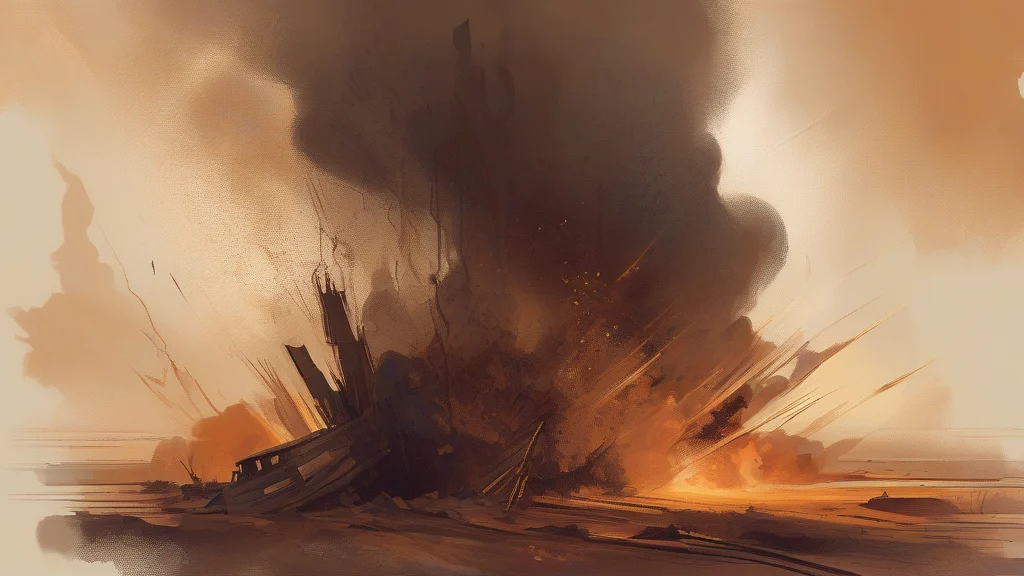
What does obliterative mean?
Obliterative is an adjective describing something that obliterates, meaning it erases completely or leaves no recognizable trace. The word is especially associated with overwhelming force, destructive power, and attempts to eliminate something so thoroughly that little survives. In military and political writing, an “obliterative force” or “obliterative ambition” suggests more than ordinary defeat: it implies the destruction or disappearance of a target, tradition, or opposing account. In literary contexts, the term can also describe effects that transform or efface the visible past. Because it is formal and rhetorically forceful, obliterative is generally less suitable for casual speech than words such as destructive or devastating. Its usefulness lies in its ability to distinguish total, trace-leaving erasure from merely serious damage or criticism.
adjectiveServing to obliterate; so destructive or thorough as to leave no trace.
- Serving to obliterate or completely erase.
- Extremely destructive or thorough, leaving no recognizable remainder.
"Historians continue to debate the obliterative ambitions of the regime."
"The novel imagines a future in which automated journalism has an obliterative effect on public discourse."
"Historians continue to debate the obliterative ambitions of the regime."
Obliterative describes a force powerful enough not merely to defeat something, but potentially to erase its traces.
Reviewed by Deb Chak, Editor. AI-assisted content curated by RJS Tech Solutions LLP.
Etymology of obliterative
The English adjective obliterative is formed from obliterate and the suffix -ative, which commonly creates adjectives meaning that something serves a particular function or action. The underlying verb obliterate comes from Latin oblitterare, originally meaning “to strike out letters,” from ob- and littera, “letter.” Latin also had related forms such as oblitteratio, and English developed obliteration alongside the adjective.
How obliterative is actually used
This is a formal and relatively literary word. It is especially associated with descriptions of force, power, effects, ambitions, and campaigns that imply total destruction or erasure.
Easily confused with obliterative
Obliterate is the verb meaning to erase completely, whereas obliterative is an adjective describing something that causes such erasure.