
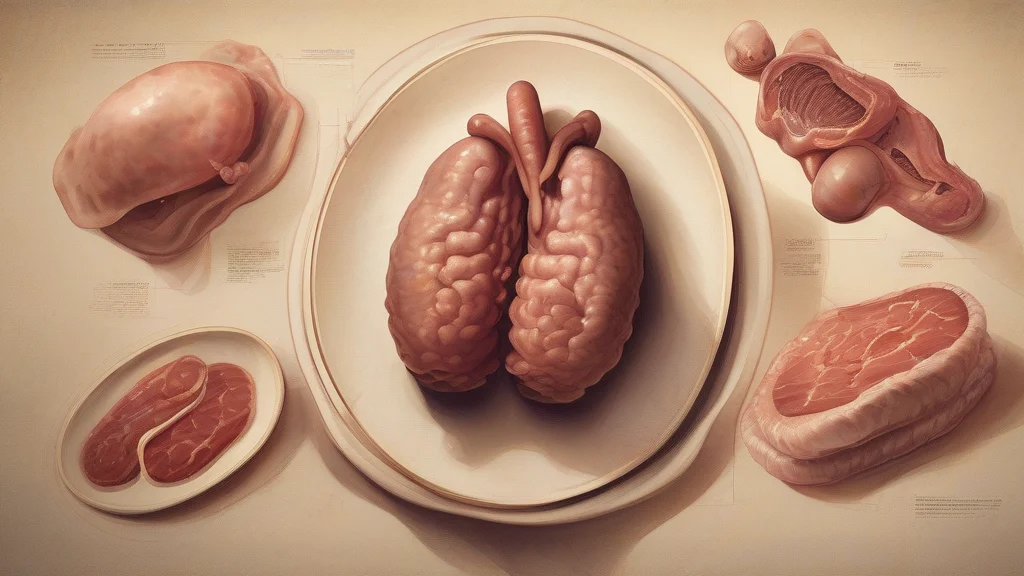
What does offal mean?
Offal means the edible internal parts of slaughtered animals, including organs such as the liver, kidneys, heart, tongue, and intestines. The word is especially associated with traditional foods and cooking traditions in Britain, Ireland, and other parts of Europe, although offal is eaten in many cuisines around the world. As a mass noun, it normally refers collectively to these foods rather than to individual portions. Offal can also be used metaphorically for remnants, waste, or people regarded as worthless or unwanted, though such uses are often derogatory. The term can sound unusual to speakers accustomed to meat defined primarily as muscle tissue, but it remains an important part of food vocabulary. Expressions such as “beef offal” and “pork offal” specify the animal from which the parts come, while dishes made from offal often preserve distinctive regional and cultural traditions.
The edible organs and internal parts of slaughtered animals, especially those used as food.
"The butcher sells fresh offal every morning."
Usually uncountable and commonly used in culinary contexts.
Remainders, discarded material, or a group of people regarded as worthless or unwanted.
"The article describes the refugees as the offal of society."
This figurative use is derogatory and often suggests contempt.
In ordinary use, offal is an uncountable mass noun. The plural offals is uncommon and may occur in technical or classificatory contexts.
"The supplier separates beef offals from other products."
Once a prized part of the meal, offal is now often treated as a niche delicacy in many countries, with dishes such as liver, kidneys, and Haggis remaining firm favorites.
Reviewed by Deb Chak, Editor. AI-assisted content curated by RJS Tech Solutions LLP.
Where does offal come from?
The word comes through Middle English from Old English offel, an old Germanic term for animal entrails or refuse. It is related to Dutch afval and German Abfall, both words associated with discarded or leftover material. The modern meaning narrowed considerably: what was once a broad term for waste or remnants is now used especially for edible organs and internal parts of slaughtered animals.
How offal is actually used
In British English, offal is commonly used as an uncountable mass noun, especially in culinary contexts. It can sound informal or colloquial in figurative, derogatory uses, whereas formal alternatives may be preferred in sensitive contexts.