
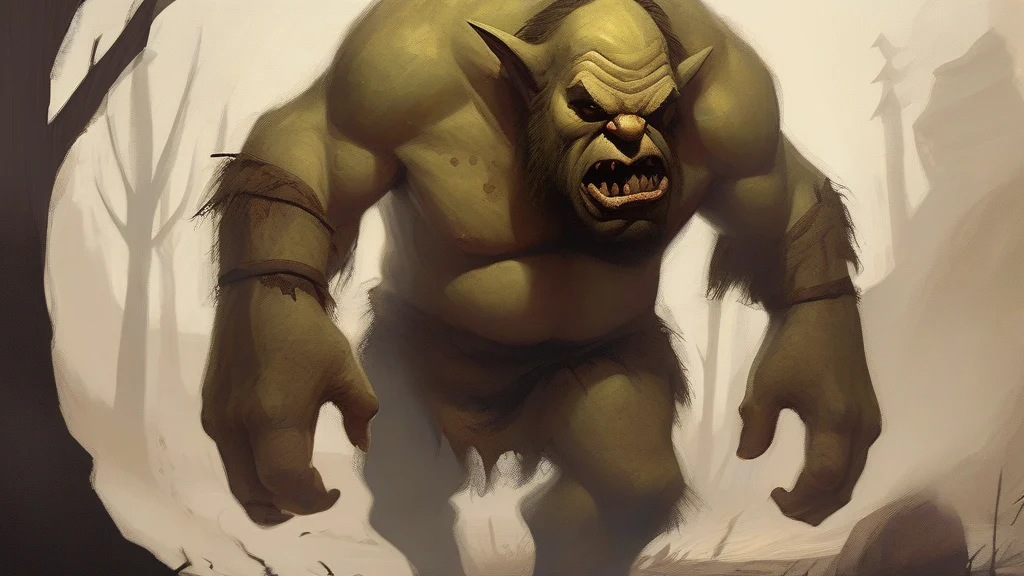
What does ogre mean?
An ogre is a gigantic, frightening creature from folklore, traditionally portrayed as violent, gluttonous, and hostile to human beings. Familiar examples include the ogre who eats children in European fairy tales and the troll-like giants who guard impossible castles. The word can also be used figuratively for a person whose behaviour is exceptionally brutal, domineering, or threatening, although the comparison is usually deliberately harsh. In ordinary speech, “ogre” is more literary and dramatic than the neutral words “giant” or “monster,” and it often evokes images of fairy tales, wilderness, and fearsome appetites. The term is most common in British and American English and retains a distinctly narrative quality, making it especially effective in descriptions of villains, monsters, and intimidating situations.
nounA large, brutish, and often cruel giant in folklore, especially one that eats or endangers human beings. By extension, it may refer to a exceptionally brutal or threatening person.
- A giant or monstrous creature, usually cruel and dangerous, found in folklore and fairy tales.
- A figurative term for a brutal, terrifying, or exceptionally threatening person.
"The children were warned never to enter the valley after dark, for an ogre lived among the mountains."
"A fearsome ogre guarded the castle gate and demanded a tribute from every passing traveller."
"The director was described as an ogre for his harsh treatment of the staff."
The standard plural is ogres.
"The stories portray ogres who live in remote mountains and terrorize nearby villages."
From blood-curdling fairy tales to modern insults, the ogre remains the classic symbol of overwhelming, human-threatening cruelty.
Reviewed by Deb Chak, Editor. AI-assisted content curated by RJS Tech Solutions LLP.
Where does ogre come from?
The English word entered use in the 18th century through French, in which the corresponding word is ogre. Its deeper origin is uncertain, although it has often been associated with Orcus, the ancient Roman deity associated with the underworld and invoked in Roman oaths.
Related word forms
How ogre is actually used
The word is strongly associated with folklore, children's stories, and figurative insult. It is sometimes used in the phrase 'eat like an ogre' to describe eating a large amount ravenously.
Easily confused with ogre
Both are giant or grotesque creatures in folklore, but a troll is more often associated with deception or enchantment, whereas an ogre is characteristically violent, brutal, and carnivorous.