
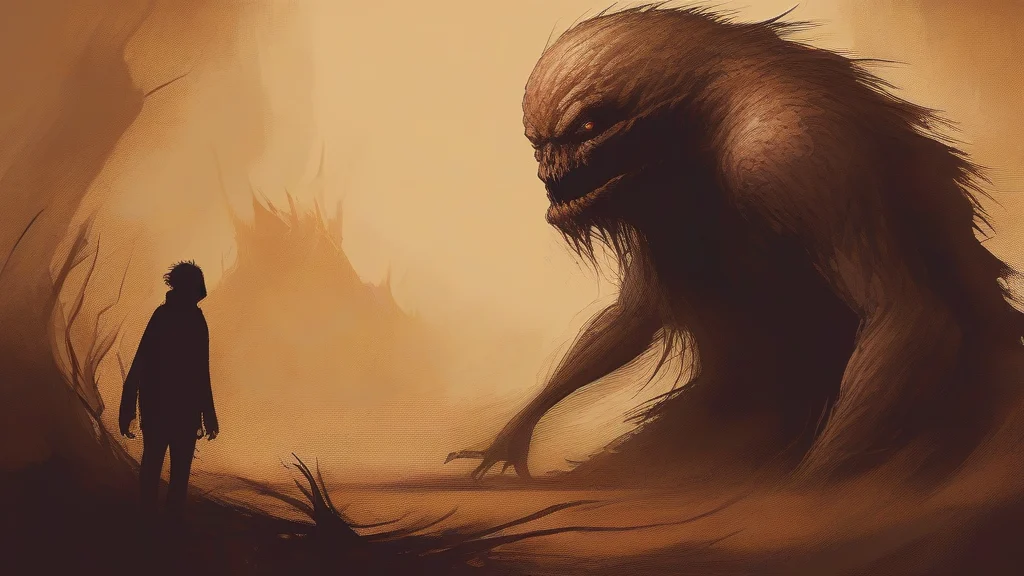
What does monster mean?
A monster is, most commonly, a creature whose appearance, power, or behavior inspires fear. By extension, the word can describe a cruel or brutal person, an overwhelming obstacle, or something so large, powerful, or successful that it seems almost unreal. This figurative use is common in informal English, as in phrases such as a monster hit or a monster of a performance. Monster can also function as a verb, meaning to treat someone with excessive brutality or aggression, though this use is chiefly informal. As a modifier, it means exceptionally large, powerful, successful, or impressive. The word often carries a dramatic, exaggerated tone rather than a precise, technical meaning, so it is especially effective in narrative, sports, entertainment, and social contexts. Its history also gives it a memorable quality: it comes from Latin monstrum, a word associated with portents and abnormal manifestations.
A creature, person, or thing that is frightening, exceptionally large, cruel, or formidable.
"The story describes a monster that hunts through the forest at night."
The word is highly versatile and commonly extended metaphorically to formidable people, forces, or achievements.
To behave brutally, aggressively, or harshly toward someone or something.
"The defenders monstered the opposing fullback throughout the second half."
Informal; chiefly used when the action is unusually harsh or physically aggressive.
Exceptionally large, powerful, successful, or impressive.
"The band's debut single became a monster hit."
Informal and usually attributive, as in monster hit, monster success, and monster truck.
The regular plural is used for both real or imaginary creatures and figurative meanings, such as business competitors or exceptional successes.
"The films portray monsters from every era of horror cinema."
The word monster entered English in the early 17th century from Latin monstrum, originally a term for a portent or an abnormal sign.
Reviewed by Deb Chak, Editor. AI-assisted content curated by RJS Tech Solutions LLP.
Where does monster come from?
The English word monster derives from Latin monstrum, meaning a monster, portent, or abnormal occurrence. Latin monstrum is generally traced to monstrare, “to show” or “make known,” and is also related to demonstrare, the source of English demonstrate. The word entered English in the early 17th century, initially in the sense of an unnatural creature or portent. Later English developed related forms such as monstrous and monstrosity, while demonstrate and demonstration continue a cognate path from the same Latin root.
Related word forms
How monster is actually used
The noun is vivid and commonly appears in stories, films, and informal speech. It can describe a literal creature, a cruel person, or an intimidatingly powerful person or thing; in the last two senses, it may be dramatic or exaggerated. The verb is informal and more common in British and American speech than in formal writing. The adjective use is also mainly informal.