
What does lobster mean?
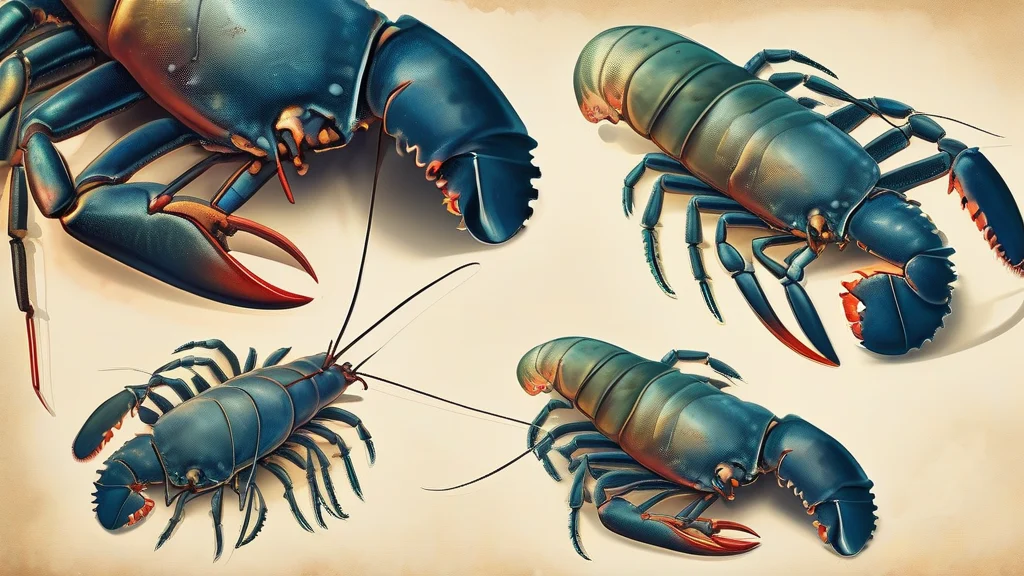
A lobster is a large marine crustacean with a protective, segmented shell, long antennae, and powerful front claws. True lobsters belong to the family Nephropidae and include species such as the American lobster; related spiny lobsters lack large claws and are a different group. Lobster is also the common name for their sweet, firm, richly flavored meat, which may be grilled, boiled, baked, or prepared in dishes such as lobster Thermidor and lobster bisque. In informal British English, “lobster” can also be a verb meaning to throw something with a high arc, although “lob” is more widely used. The word evokes luxury and special-occasion dining, but it also appears naturally in descriptions of seafood, cooking, coastal life, and marine biology.
A large marine crustacean with a hard shell, long antennae, and, in true lobsters, two large front claws; the edible flesh of the animal is also called lobster.
"She peeled a lobster and served it with lemon butter."
The unqualified word most often refers to clawed true lobsters. “Spiny lobster” and “langoustine” can refer to related but different crustaceans, especially in British usage.
Informally, to throw or lob something with a high arc.
"He lobstered the ball over the wall and into the garden."
This verb use is chiefly British and informal; “lobbed” is more common in American English.
The standard plural of the noun is “lobsters,” used for individual animals or, in food contexts, individual servings or portions.
"The market sells fresh lobsters by the kilogram."
A lobster can regrow a lost claw, gradually forming a replacement over time.
Reviewed by Deb Chak, Editor. AI-assisted content curated by RJS Tech Solutions LLP.
Where does lobster come from?
The word entered English in the Middle English period through Old French l’ostre, a form of a Latin word for a large crustacean or sea crayfish. The English spelling developed through several variants before settling on “lobster” in its modern form. Its precise ancient associations are less certain than its transmission through Old French, so modern related forms cannot confidently be identified.
How lobster is actually used
The standard British pronunciation is /ˈlɒbstə(r)/, while the usual American pronunciation is /ˈlɑbstər/. As a verb, “lobster” is informal and chiefly British; in North America, “lob” is more common.
Easily confused with lobster
Crayfish are generally smaller freshwater crustaceans, whereas lobsters are large marine animals.
In British usage, langoustine commonly means spiny lobster, while in American usage it may refer to a large shrimp rather than the clawed American lobster.