
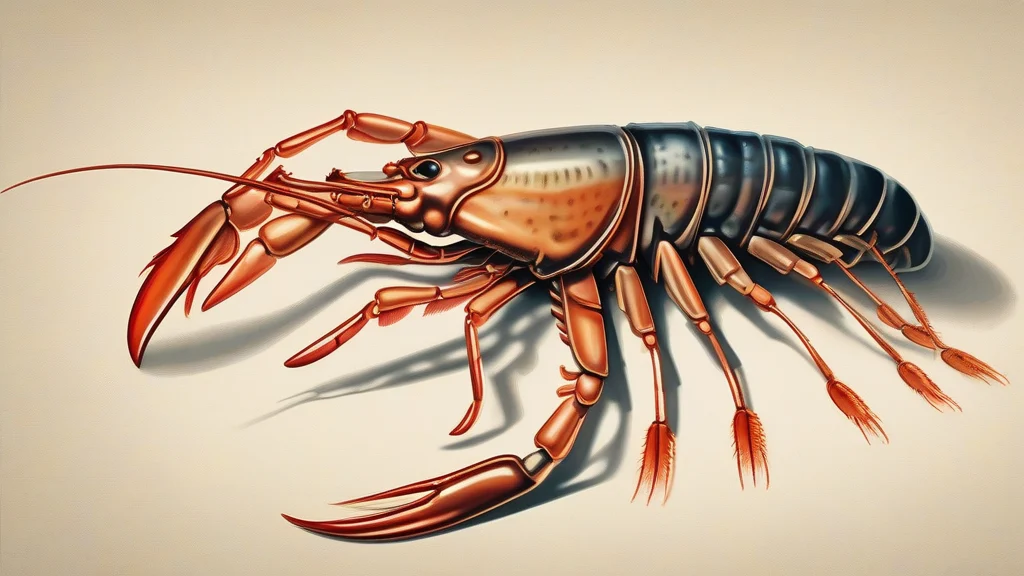
What does langoustine mean?
Langoustine is a noun denoting a large edible prawn, especially one of the species found in the North Atlantic and Mediterranean. It is used in ordinary British English for seafood and also appears in American restaurant and menu language, where it often conveys an upscale or premium quality. The word is closely associated with preparations such as grilling, butter sauces, pasta, and risotto, and its firm, sweet flesh is valued by cooks. Langoustine should not be confused with scampi, which usually refers to smaller Mediterranean prawns, although the terms overlap in some commercial contexts. The word has an unusual history: it reached English through French from a Provençal form ultimately connected with Latin locusta, a term associated with both lobsters and locusts. Today it remains a useful distinction for a large, distinctive prawn rather than prawn generally.
nounA large edible prawn, especially one of the species caught in the North Atlantic and Mediterranean. The term is particularly common in British and restaurant usage.
- A large edible prawn, especially one of the commercially important species found in the North Atlantic and Mediterranean.
"The restaurant served grilled langoustine with lemon, garlic, and fresh herbs."
"The restaurant served grilled langoustine with lemon, garlic, and fresh herbs."
"We chose langoustine for the seafood platter because it was the special of the day."
The standard plural is formed by adding -s.
"The menu offers langoustines grilled with garlic and lemon."
The word began with lobsters, then became a prawn: a linguistic sea change.
Reviewed by Deb Chak, Editor. AI-assisted content curated by RJS Tech Solutions LLP.
Words that share this root
How langoustine is actually used
In British English, langoustine is a familiar seafood term. In American English, it is less common and tends to appear in restaurant menus and specialized seafood contexts.
Easily confused with langoustine
Scampi are smaller Mediterranean prawns commonly sold under that name, while langoustine usually refers to the larger North Atlantic and Mediterranean prawn.