
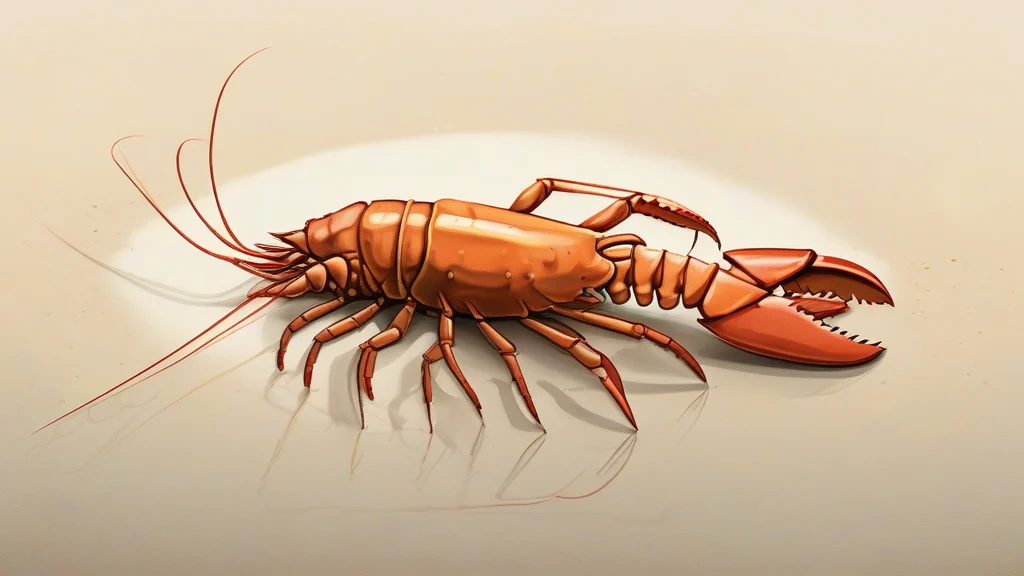
What does langouste mean?
Langouste is a chiefly culinary term for a large, edible spiny lobster, particularly the European species known for its long antennae, firm shell, and sweet, meaty flesh. It appears in British and American English, though it is especially associated with French-inspired restaurant menus and dishes such as langouste Thermidor. The word should not be confused with langoustine, a smaller related crustacean also called a Norwegian lobster. Although “spiny lobster” is its clearest English equivalent, “langouste” carries a more refined and distinctly French culinary association. Its pronunciation is /ˈlæŋɡuːst/ in British English, while many American speakers use /ˈlɑːŋɡuːst/. The term ultimately comes through French from Provençal, and it shares a Latin ancestor with English words such as “lobster” and “locust.”
nounA langouste is a large edible marine crustacean with a hard shell, long antennae, and a firm, sweet flesh, commonly called a spiny lobster. In English, the term often refers specifically to the European spiny lobster and is especially common in culinary contexts.
- A large spiny lobster, especially the European spiny lobster, valued as food.
"They celebrated the anniversary with grilled langouste and champagne."
"The menu features grilled langouste with garlic butter and lemon."
"Langouste Thermidor is a classic French dish served with a rich, creamy sauce."
The regular plural adds -s and is used when referring to multiple langoustes or to different kinds of spiny lobster.
"The fishermen unloaded several large langoustes before sunrise."
The lobster on a classic French menu has a name rooted in the same Latin word as the English word lobster: locusta.
Reviewed by Deb Chak, Editor. AI-assisted content curated by RJS Tech Solutions LLP.
Where does langouste come from?
English borrowed langouste from French, where it denotes a spiny lobster. French in turn developed the word from Provençal langousta, ultimately tracing it to Latin locusta. The same Latin source also lies behind English “lobster” and “locust,” although their later meanings diverged considerably.
Related word forms
How langouste is actually used
The word is primarily culinary and formal, and in British English it commonly means the European spiny lobster rather than a New England or South African lobster. American pronunciation may use /ˈlɑːŋɡuːst/ in place of the British /ˈlæŋɡuːst/.
Easily confused with langouste
A langouste is a large spiny lobster, whereas a langoustine is a smaller, related crustacean commonly called a Norwegian lobster or Dublin Bay prawn.