
What does opal mean?
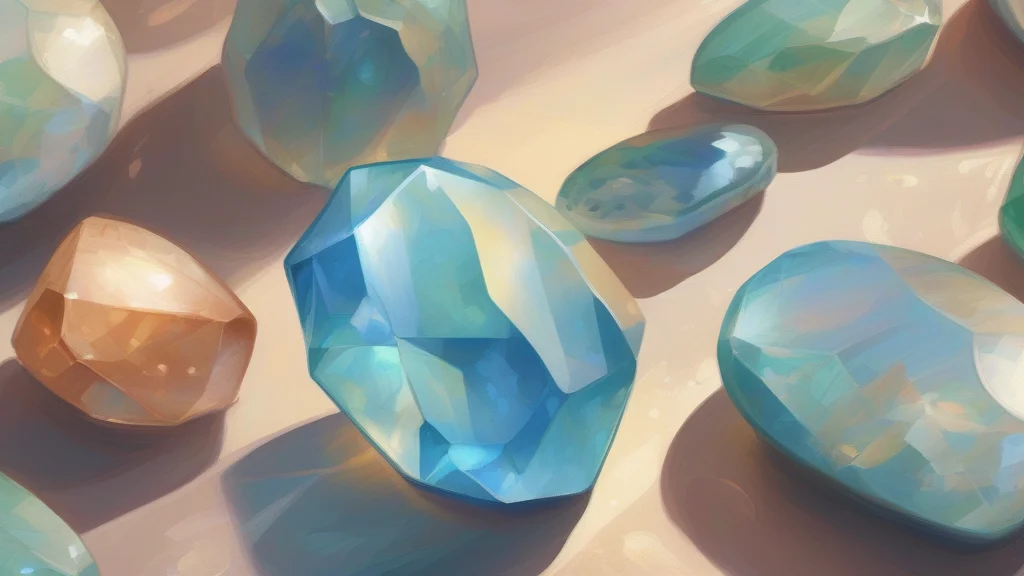
An opal is a gemstone formed from hydrated silica, the same basic compound that makes quartz and flint. Its familiar white, gray, or black body may contain microscopic spheres of silica that split incoming light into changing spectral colors, a phenomenon known as play-of-color. Some opals display this effect strongly, while others are simply cloudy, translucent, or opaque. Black opal commonly has a dark body and vivid patches of color; white opal generally has a pale body and softer flashes. The word can refer both to the polished gemstone used in jewelry and, in scientific contexts, to the natural mineral material from which such stones are cut. Opal has long been associated with unusual beauty because its appearance can change with angle, lighting, and movement, making each piece distinctive.
nounA precious or semiprecious gemstone characterized by a milky or translucent body color and, in many varieties, shifting flashes of color within the stone. The name also refers to the mineral type from which many such gemstones are formed.
- A gemstone, especially one displaying shifting colors.
- The mineral silica in its natural, finely divided or amorphous form.
"She wore a ring set with a vivid Australian opal."
"The museum's collection includes several black opals with intense blue and green fire."
"Opal is formed when silica-rich water slowly deposits silica in cracks and cavities in rock."
Use “opals” for multiple gemstones or individual examples of the mineral.
"Collectors paid high prices for rare black opals."
An opal's famous play of color can shift as the stone is turned, because light diffracts through tiny silica spheres suspended inside it.
Reviewed by Deb Chak, Editor. AI-assisted content curated by RJS Tech Solutions LLP.
Where does opal come from?
The English word “opal” comes through Latin from the ancient Greek opallos, a term applied to a precious stone or gemstone. The ultimate origin of the Greek term is uncertain, so the earlier source of the name cannot be identified with confidence. English later developed broader mineralogical uses for the word, and related forms such as “opalescent” and “opalize” were formed from the same base.
Related word forms
How opal is actually used
In ordinary usage, “opal” usually refers to a cut and polished gemstone. In mineralogical contexts it can refer more broadly to natural opal or to the mineral material from which precious opal is formed.
Easily confused with opal
Opal is a natural mineral and gemstone, while opalite is a man-made material designed to resemble opal.