
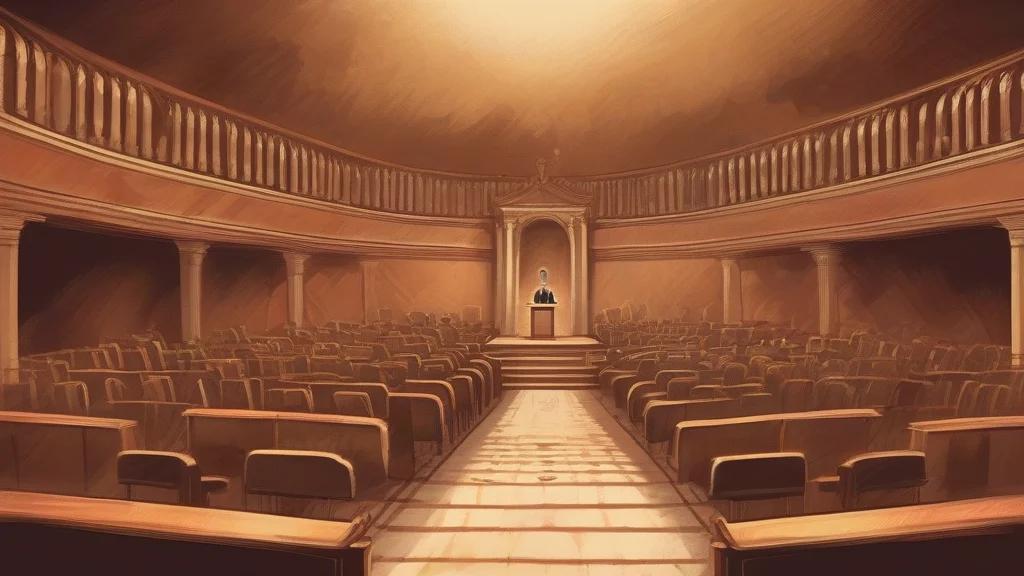
What does oratory mean?
Oratory is a formal word for public speaking, especially speaking intended to persuade, move, or impress an audience. It may refer to the speaking itself, to the skill and style involved, or, in a less common historical sense, to a platform or building from which a speaker addresses those present. In modern political and religious contexts, “oratory” often suggests elevated, carefully shaped language and rhetorical polish. That same association can carry a critical edge: describing a speech as “empty oratory” suggests that persuasive language has not been matched by substance. Although often used for modern public addresses, the word has an old and respectable history in classical public life, where skilled speaking was central to civic, legal, and religious affairs. It is consequently more formal than the neutral phrase “public speaking” and can sound complimentary when it indicates genuine command of language, or dismissive when it implies bombast. The uncommon architectural sense survives in descriptions of historic churches, halls, and other places designed for preaching or assembly.
nounThe art or practice of public speaking, especially persuasive, elevated, or ceremonial speaking. In a less common sense, it means a building or platform from which a speaker addresses an audience.
- The art, practice, or style of public speaking, especially persuasive or elevated speaking.
- A formal public speech or address, especially one marked by rhetorical flourish.
- A structure, platform, or room from which a speaker addresses an audience, especially in a historic or religious setting.
"His command of rhetoric and emotional appeal turned the campaign speech into memorable oratory."
"Her campaign combined persuasive oratory with a clear and practical program."
"The old oratory provided an elevated platform from which the minister addressed the congregation."
The plural is standard and is especially used for buildings or platforms designed for public speaking, preaching, or assembly.
"The tour included the oratories of several medieval churches."
Oratory began in Roman courts, where an orator was someone who pleaded a case before the city's elite.
Reviewed by Deb Chak, Editor. AI-assisted content curated by RJS Tech Solutions LLP.
Where does oratory come from?
The word entered English through French oratoire, which drew on Latin forms associated with ōrātor, meaning “orator” or “pleader,” and ōrāre, meaning “to plead or pray.” The Latin root is also the source of oration and the back-formed verb orate. Over time, English used the word both for the art of public speaking and, less commonly, for a speaker's platform or building.
Related word forms
How oratory is actually used
The word is formal and often suggests rhetorical polish, dignity, or emotional force. In criticism, it can imply bombast or persuasive language unsupported by substance. The architectural sense is uncommon today but remains established in historical, religious, and architectural descriptions.
Easily confused with oratory
An oration is an individual formal speech, whereas oratory is the broader art or practice of public speaking, although the nouns overlap in usage.