
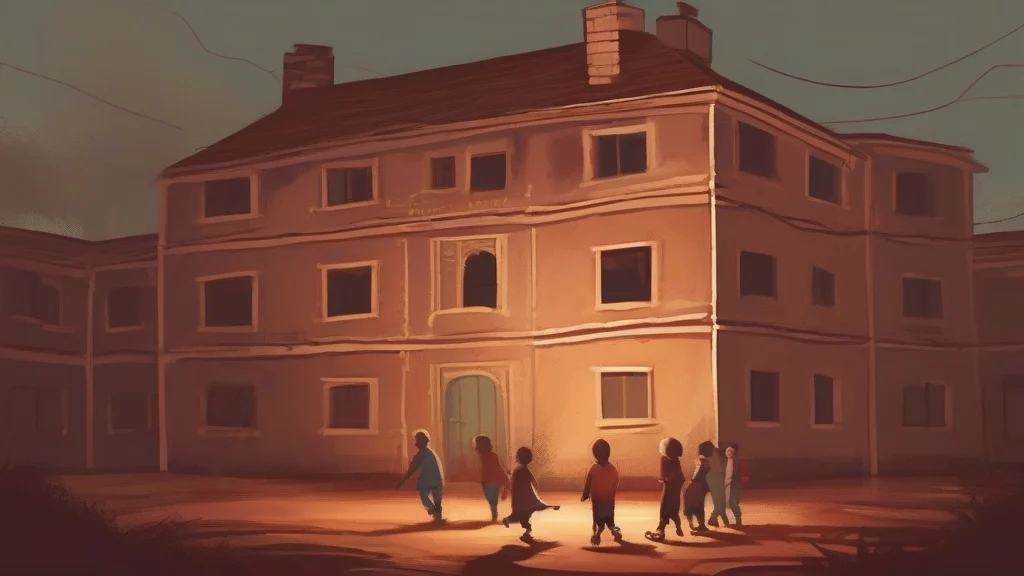
What does orphanage mean?
An orphanage is a residential institution where children whose parents have died or are otherwise unable to care for them receive accommodation, education, and guidance. The word has a broad public meaning, but it can sound formal or historical because institutional care has become less common in many countries. Children may still live in orphanages in some parts of the world, while others are placed in foster homes, adoptive families, or other forms of care. In literature and conversation, an orphanage often represents a setting where children face hardship while also forming strong relationships and receiving support. The term comes from “orphan,” which ultimately comes from Greek and refers to a child without parents. Understanding the word includes recognizing both its literal institutional meaning and its cultural associations with vulnerable children, communal care, and belonging.
nounAn institution or home where children whose parents are dead or otherwise unavailable are cared for, educated, and prepared for adult life. In modern practice, many children who would once have lived in orphanages are placed in foster care or adoptive homes.
- An institution or residential home providing care, education, and upbringing for children whose parents are dead or otherwise unable to care for them.
"After her parents died, she spent several years at an orphanage before being adopted."
"The orphanage was known for providing every resident with a strong education."
"She volunteered at an orphanage and later helped several young people begin university."
The plural form is used when referring to more than one orphanage or to multiple institutions of this kind.
"Several orphanages in the region provide specialized medical care for children with complex needs."
The word "orphanage" preserves an ancient Greek idea: a child without parents was considered parentless, or "orphanos," before society built formal institutions to care for such children.
Reviewed by Deb Chak, Editor. AI-assisted content curated by RJS Tech Solutions LLP.
Where does orphanage come from?
“Orphanage” was borrowed into English from French orphelinage, which was derived from orphelin, meaning an orphan. “Orphan” comes through Latin from Greek orphanos, referring to a child bereft of parents. The English institutional meaning developed from the more general sense of an orphan and the related idea of a place that shelters or provides for children lacking parental care.
How orphanage is actually used
The term is understood in both British and American English. In contemporary discussions, it is often contrasted with foster care and adoption because many former orphanages have been replaced by family-based placements.